Midnight Shift with Metallica
Headphones Maxed Out, the Horseman Galloping Across the Second Screen
Why Metallica‘s “Through the Never” Still Won’t Let Me Go After More Than a Decade.
It’s just past midnight. On the main screen, the code for stagedive.net stares back at me, some PHP issue refusing to behave the way I want it to. On the second monitor, “Through the Never” is running. Headphones maxed out. Head nodding, toes tapping along, fingers typing. But my eyes keep drifting to the right, to where Kirk Hammett is carving the solo from “One” into the arena while outside, in the film’s fictional city, a masked horseman strings up his latest trophy from a lamppost.
There’s no reason to write about this film tonight. No anniversary, no remaster, no news peg. Just this feeling that creeps in when you’re building a music magazine at midnight and you’ve got a film running that’s trying to do exactly what I’m trying to do with stagedive.net: translate the raw, uncontrollable energy of music into a different medium. And fail at it spectacularly. And still create something that endures.
The Pit, the Sweat, and the Dream of the Photo Pit
I need to back up for a moment. Before stagedive.net existed, before these late-night coding sessions, I was standing in the photo pit. Concert photography, festival photography. That was my way into this world. Three songs, no flash, elbow to elbow with other photographers while the kick drum massages your ribcage and you try to hit the shutter in that split second when the singer steps into the light. Anyone who’s done it knows: there’s hardly anything more intense. You’re as close to the music as you can possibly get without being on stage yourself.
And from the very beginning, there was this one dream hovering above everything: Metallica. To photograph Metallica live, just once. To stand in the pit when Hetfield strikes the opening chords of “Master of Puppets” and capture that through the viewfinder. Not as a fan in the crowd, but as a photographer who freezes that moment in time.
Then came the break. Almost a year and a half. No concerts, no festivals, no camera around my neck. The reasons are private and don’t matter here. What matters: at some point during that break, the dream of photographing music transformed into a different dream. Bigger. Crazier. My own music magazine. stagedive.net. Not just another blog regurgitating press releases, but something that gives back to the scene. Investigative, independent, with conviction.
And so here I sit. New chapter. Code on one screen, Metallica on the other. And the old dream? It’s not gone. It just changed shape.
A Film Nobody Asked For
That was 2013. Metallica poured over 30 million dollars into a film the world hadn’t ordered. Not a conventional concert recording, not a “Some Kind of Monster” part two. Instead, a surreal IMAX 3D hybrid of live performance and apocalyptic narrative, directed by Nimród Antal, a filmmaker barely anyone outside of film nerd circles had on their radar.
The idea had been rattling around Lars Ulrich’s head since the late nineties. A Metallica film that wouldn’t settle for simply showing the band on stage. One that would capture the feeling of four thousand watts slamming through your chest while the world ceases to exist for one and a half hours. Pouring that feeling into images was the plan. And as with everything Metallica touches: half measures were never an option.
So they built a 360-degree stage, 61 meters long, 18 meters wide. Set up 24 cameras. Played several shows in Edmonton and Vancouver in August 2012, collecting 60 hours of footage. And alongside that, Antal shot the story of a young roadie named Trip, played by Dane DeHaan, who gets sent out during the concert to retrieve a mysterious bag from a broken-down truck and stumbles into a world that looks like the music video “…And Justice for All” always deserved.
As someone who has tried to capture the energy of a concert in a single frame, I understand the madness behind this project. Metallica wanted the same thing, just with 24 cameras, a fictional storyline, and an IMAX budget. The impulse is identical: you stand in front of this wall of sound and light, and you want others to feel what you feel in that moment. The camera, whether photo or film, is always an inadequate tool. But you try anyway.
Midnight, Second Monitor
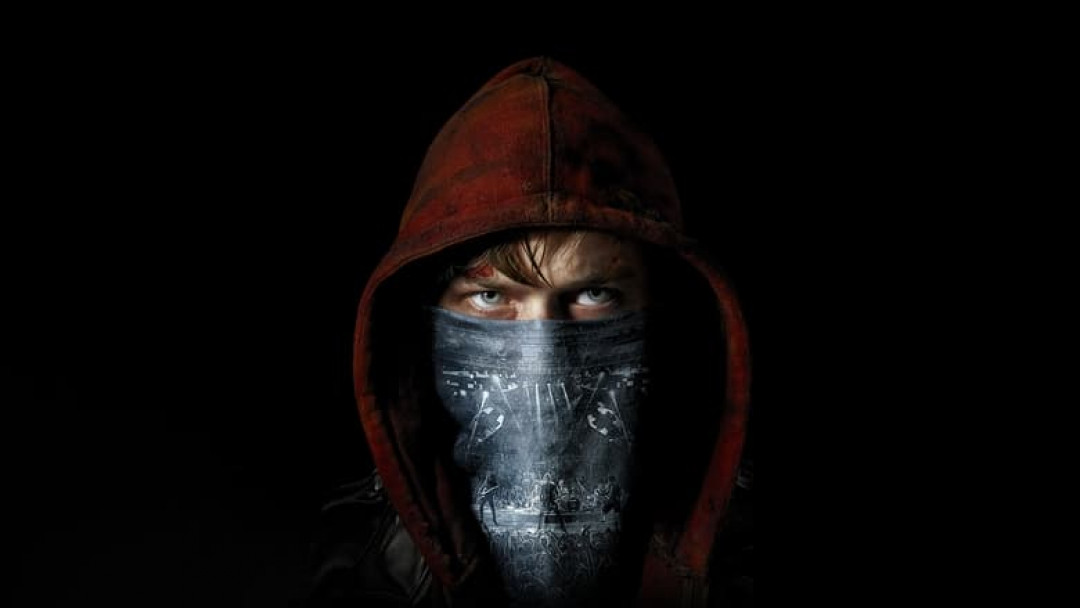
The scene playing right now is Trip stumbling through the streets after his car crash. Chaos crashes down on him. Street battles, corpses dangling from bridges, fire everywhere. And then that horseman. That archaic death figure in a gas mask with a noose, galloping through the inferno as though it materialized straight from a nightmare.
I pause. Fingers off the keyboard. Headphones louder, even though they’re already maxed out.
There are moments in this film that still grab me after all these years. Not because of the plot, which is, if we’re being honest, thin as paper. But because of the way Antal weaves the music and the images into each other. When “Enter Sandman” kicks in and Trip runs through burning streets. When “Orion” plays over the credits and you feel like you’re waking up from a fever dream. The film doesn’t work with logic. It works with force.
And cinematographer Gyula Pados delivered shots that I, as a concert photographer, would kill for. That balance between the sweat-drenched intimacy when Trujillo’s hair whips through the air and the panoramic wide shots that capture the scale of the stage and the pulsing mass of the audience. That’s concert photography in motion, with 24 simultaneous cameras and a budget every photographer in the pit can only dream of.
The Bag and the Question Nobody Needs to Answer
The genius of “Through the Never” is simultaneously its biggest problem: the mysterious bag that Trip drags through the apocalypse is never opened. Classic MacGuffin. Lars Ulrich openly admitted that after three years of working on the film, he himself didn’t know what the narrative “means.” And that’s exactly what makes the film so fascinating to me.
Because what’s in the bag is for everyone to decide. For me, tonight, it’s this: the drive to get back up after a year and a half of silence and start something new. Something you don’t know anyone will ever see. Something bigger than what you did before, and you suspect you’re in over your head. But you do it anyway. Because the music is playing. Because your head is nodding. Because it feels right, even when there’s no rational reason for it.
Trip drags his bag through a burning city, gets beaten, set on fire, dragged behind a horse. And at the end, he places it on the empty stage after the concert is long over. Nobody is there to see what he went through. But he pulled it off. If that’s not a metaphor for anyone sitting up at night working on a project the world didn’t ask for, then I don’t know what is.
9 Million Against 32 Million
The numbers are brutal. Opening weekend in the US: 1.6 million dollars. Total worldwide gross: somewhere between 9 and 21 million depending on the source. The budget: at least 18 million, realistically north of 30 million, financed out of the band members’ own pockets with no major Hollywood studio as a safety net.
The R-rating shut out younger fans. The marketing never managed to communicate what the film actually was. And the name Nimród Antal didn’t draw anyone into theaters who wasn’t already a Metallica fan. Biographers of the band called the entire project misguided, an attempt to breathe new life into a decade-old idea. James Hetfield reflected on it soberly in 2015, saying the band had taken a massive risk and maybe should have thought about it more carefully. It was their fault, lesson learned.
Ulrich, as usual, saw it differently. He pointed out that Metallica never looks at projects in isolation. If the money doesn’t come back through the film, then through T-shirt sales seven years down the line. Something good will come out of it eventually.
And he’s not entirely wrong. On Blu-ray, the film briefly became a bestseller. The stage was partially reused on later tours. And more than a decade later, the film is running on the second screen of a guy coding a music magazine at midnight who catches himself writing an article about it even though nobody asked.
Why the Film Works Even Though It Doesn’t
Rock Hard magazine called the narrative portion superfluous and expressed disbelief that the band had sunk so much money into a half-baked idea. Roger Ebert described the film as simultaneously ridiculous and sublime. Rotten Tomatoes credited the concert segments with electrifying intensity but faulted the fictional passages. And on a purely sober level, they’re all right.
But sober is not the state in which you should watch “Through the Never.”
This film doesn’t work as a narrative feature. The plot is too thin, the symbolism too heavy-handed, the resolution deliberately withheld. And it only partially works as a pure concert film, because the cuts to the storyline break the flow of the performance. What it does achieve, though, is something hard to put into words: it creates a feeling. The feeling of being awake in the middle of the night while the world outside sleeps, listening to music so loud it drowns out your thoughts. The feeling that something is burning, even if you can’t quite say what.
Headphones Off. Credits. Back to the Code.
“Orion” fades. The credits roll. I take the headphones off and stare for a moment at the code that still won’t do what it’s supposed to. The silence after “Through the Never” feels like the houselights coming up when a concert is over. Disorienting. A little empty. But also: charged.
Metallica did everything wrong with this film that you can do wrong. Too much money, too little focus, a concept nobody understood, not even the band themselves. And yet, somehow, they created something that still makes me stop working at midnight and write about it after all these years.
I’ve never seen Metallica through a camera viewfinder. Not yet. But I’m building something right now that might get me there. And if it doesn’t, that’s fine too. Because what’s in the bag is for everyone to decide. Mine, right now, is this code. This site. This new chapter.
And Metallica on the second screen, headphones maxed out, head nodding.