Between Resistance and Embarrassment
The Super Bowl and Its Political Aftermath
Super Bowl LX is history, the Seattle Seahawks are champions, and Bad Bunny made history with the first entirely Spanish-language Halftime Show. But anyone who thinks that settled the discussions doesn’t know the rock scene very well. From public political declarations to embarrassing lip-sync fails to passionate protest rock: the weeks surrounding the biggest US sporting event have once again shown how deep the political divide runs in the music world.
Wes Borland: Zero Tolerance for MAGA
Limp Bizkit guitarist Wes Borland has never minced words when it comes to politics. As early as 2016, he took an unambiguous stance against Trump. In early February 2026, he doubled down via Instagram Stories, bluntly urging his followers to unfollow him if they supported Trump or were even friends with Trump supporters.
The reaction was predictable: a wave of both approval and outrage in equal measure. Borland remained unfazed. On his 51st birthday on 6 February, he doubled down on his position, attacking not only Trump but also the US Immigration and Customs Enforcement agency ICE, while simultaneously criticising the Democratic Party for its weak leadership. Only Bernie Sanders and Alexandria Ocasio-Cortez were spared as glimmers of hope.
In response to the usual accusation that he should just stick to playing guitar, Borland countered with his characteristic sharpness, pointing out that people were hating him for rejecting hate. In a follow-up post, he delivered one of his most memorable lines, telling Trump supporters they were like devil worshippers — but not the cool kind. The Baphomet image he shared alongside it underscored his typical blend of provocation and humour.
Notably, Tom Morello of Rage Against the Machine responded to Borland’s statement with a reference to the Limp Bizkit hit “Rollin’,” unmistakably signalling solidarity.
Kid Rock and the Lip-Sync Debacle
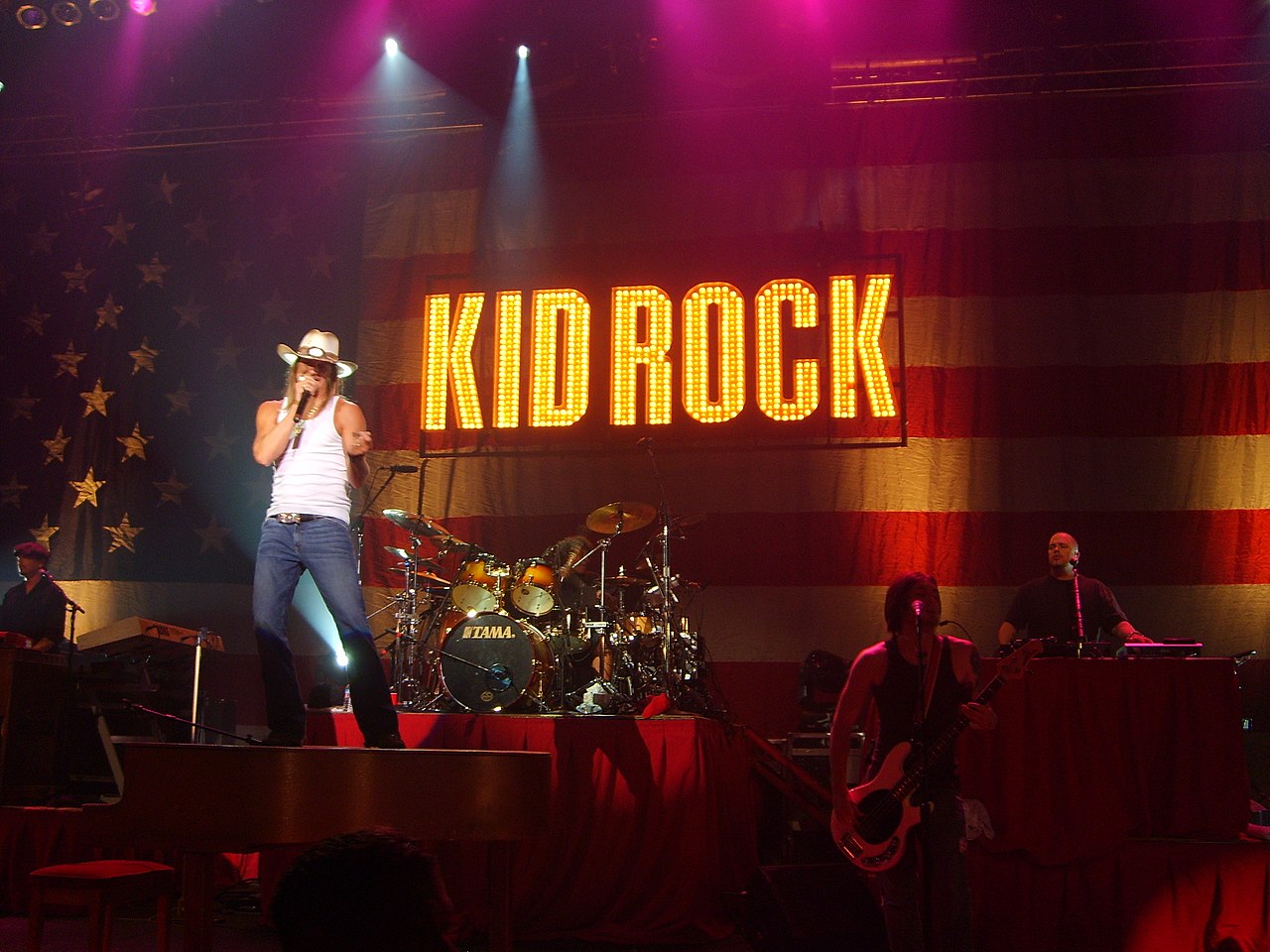
While Bad Bunny performed live at Levi’s Stadium in Santa Clara before an audience of millions, the conservative counter-programme was running simultaneously: the “All-American Halftime Show,” organised by Turning Point USA. Headlining: Kid Rock, a vocal Trump supporter for years.
What was intended as a patriotic counterweight to the Spanish-language Halftime Show, however, turned into a PR disaster. During Kid Rock’s performance of “Bawitdaba,” his lip movements and vocals were visibly out of sync. The internet responded mercilessly, and the ridicule was swift.
Kid Rock attempted damage control. In a five-minute video on X, he explained that the show had been pre-recorded but performed live. The synchronisation issue was a technical error by the production team, he claimed. His argument: had he actually been lip-syncing, the synchronisation would have been effortless. Instead, his high-energy performance had posed challenges for the technicians. Additionally, someone on the team apparently hadn’t known the song well enough.
The explanation sounds plausible at first glance but raises just as many questions. If Kid Rock himself noticed the synchronisation problems after reviewing the raw footage, why was the show broadcast in that state? And how can a pre-recorded — and therefore controllable — performance fail so spectacularly on a technical level?
The numbers speak for themselves: while Kid Rock’s alternative show peaked at around six million simultaneous viewers on the livestream, Bad Bunny’s official Halftime Show likely attracted a multiple of that. Rolling Stone described Kid Rock’s performance as uninspired, Jimmy Kimmel called it a lip-sync battle against himself. The late-night comedians had enough material for days.
Tom Morello: Protest as a Life’s Work
While the Super Bowl machinery was running at full speed, Tom Morello had already made a very different statement days earlier. On 30 January, the Rage Against the Machine guitarist organised the “Concert of Solidarity & Resistance to Defend Minnesota” at the legendary First Avenue in Minneapolis — the club that Prince once made world-famous.
The benefit concert was no abstract political gesture but had a concrete, tragic reason: the proceeds went to the families of Renée Good and Alex Pretti, two US citizens who were killed during federal immigration enforcement operations in Minneapolis in January 2026. The case had sparked nationwide protests.
Morello left no doubt about where he stood. In his announcement, he bluntly described the situation as fascism and called for resistance. Minneapolis, he said, was an inspiration to the entire nation — its people had heroically stood up against ICE and Trump. Salvation could only come from the people themselves.
The line-up was impressive: alongside Morello, Rise Against performed, as did legendary flamenco guitarist Al Di Meola and songwriter Ike Reilly. The absolute highlight, however, was the surprise appearance of Bruce Springsteen, who performed his protest song “Streets of Minneapolis” — released just days earlier — live for the first time. Springsteen had written and recorded the song over a single weekend as a direct response to the deaths in Minneapolis.
The emotional climax of the afternoon: Springsteen and Morello performing “The Ghost of Tom Joad” together, while Morello flipped his guitar to reveal the inscription “Arrest the President.” According to eyewitness accounts, Springsteen laughed and beamed throughout.
To close, all musicians gathered for a collective rendition of John Lennon’s “Power to the People.” Morello then urged the audience to join the protests on the streets of Minneapolis and led the way himself. Former Minnesota Governor Jesse Ventura was also in attendance.
The Big Picture: The Culture Wars of the Rock Scene
What connects these three stories is more than just their timing around the Super Bowl. They reveal a music scene as politically divided as the country itself.
On one side stand artists like Borland and Morello, who use their platform to voice dissent even when it costs them fans. Borland accepts the risk of alienating part of his audience; Morello has made no compromises when it comes to political protest for three decades. That Springsteen — alongside Bob Dylan arguably the most important political songwriter in American rock history — joins their ranks surprises no one, but it underscores the seriousness of the situation.
On the other side, Kid Rock positions himself as the figurehead of a conservative counterculture, complete with his own halftime show as a defiant statement against an NFL perceived as too progressive. That this very counterproject failed due to a synchronisation glitch carries an irony that even the best screenplay couldn’t have delivered.
In between stand bands like Green Day, who played their repertoire of political anthems at the Super Bowl kickoff but reportedly refrained from the expected provocative political stunt. Even in protest, it seems, there are different levels of escalation.
The weeks surrounding Super Bowl LX have confirmed once again: rock music was never apolitical, and anyone claiming otherwise hasn’t been paying attention. The question is no longer whether musicians are allowed to express political views. The question is whether they can afford not to.