
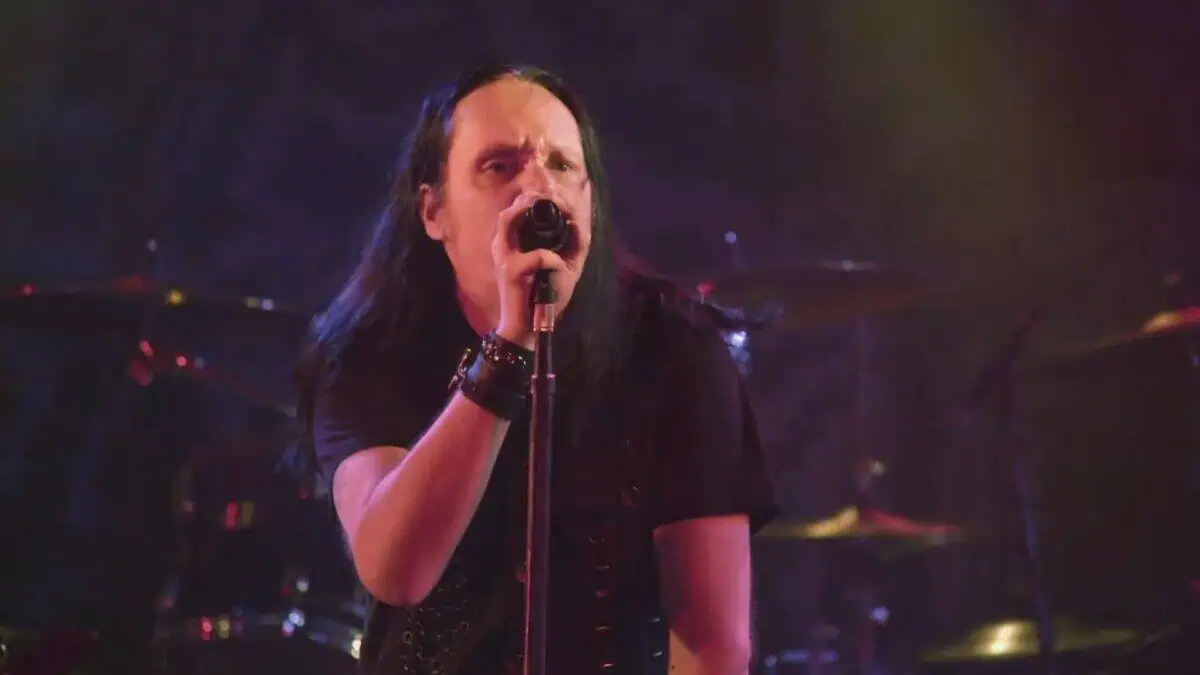
Four Voices, One Vision - The Vocalist Eras of Arch Enemy
Johan Liiva and the Founding Years: When Arch Enemy Didn’t Know the World Yet
Part 1 of the series “Four Voices, One Vision” / The Vocalist Eras of Arch Enemy
Before Gossow, before White-Gluz, before Hart, there was a singer from Helsingborg who laid the foundation for one of the greatest melodic death metal bands in history alongside Michael Amott. The story of Johan Liiva is that of a man who co-created a band that ultimately outgrew him.
The story of Arch Enemy does not begin in 1996. It begins in 1988. In Växjö, a small town in southern Sweden, two teenagers start a band called Global Carnage. Their names: Michael Amott and Johan Liiva. What connects them is a shared enthusiasm for the extreme sound pouring out of rehearsal rooms in Stockholm, Gothenburg, and Tampere in the late Eighties. Global Carnage quickly becomes Carnage, and Carnage becomes one of the cornerstones of Swedish death metal.
The band releases two demos that are eagerly traded in the underground: “The Day Man Lost” and “Infestation of Evil.” But Carnage is unstable from the start. Constant lineup changes tear at the band. By the time their sole album “Dark Recollections” is released in 1990, recorded at the legendary Sunlight Studios under Tomas Skogsberg, Amott is the only remaining founding member. Liiva has already left the band by this point, with vocals handled by Matti Kärki. The album is now considered a classic of Swedish death metal. The other members would go on to reform Dismember.
After Carnage’s demise, Amott and Liiva go their separate ways. Amott becomes guitarist for Carcass and contributes to the landmark album “Heartwork” (1993), a record that helps define the term melodic death metal. Liiva founds Furbowl, initially as a duo with drummer Max Thornell, releasing the debut “Those Shredded Dreams” in 1992 and the follow-up “The Autumn Years” in 1994. Furbowl operate between death and thrash metal but never find a truly large audience.
A Phone Call That Changed Everything
In the mid-Nineties, Amott leaves Carcass and founds the classic-rock-influenced band Spiritual Beggars. But extreme metal won’t let him go. He wants to further explore the core idea behind “Heartwork”: the fusion of melody and brutality, but in a project of his own. He contacts Liiva, his old companion from the Carnage days, and his younger brother Christopher Amott, who is still attending music school at the time. With Daniel Erlandsson (Eucharist), initially hired as a session drummer, the framework is in place. Michael Amott would later describe his intentions: an attempt to merge melody with aggression and technicality.
Arch Enemy is born. But at first, the project is little more than an experiment.
Nine Days at Studio Fredman
The debut album “Black Earth” is recorded in just nine days in February and March 1996 at Studio Fredman in Gothenburg. Fredrik Nordström, who would go on to produce In Flames and Soilwork just a few years later, sits behind the mixing desk. There are no computers, no digital post-processing. Everything runs on analog 2-inch tape. The songs are pre-arranged, the recordings efficient and raw.
What few people know: On “Black Earth,” Michael Amott not only plays guitar but also bass. The booklet credits Liiva as bassist, but Amott later admitted he had deliberately arranged the credits that way to make the album look more like a proper band effort. In reality, “Black Earth” is largely an Amott solo project, with Liiva contributing the vocals.
And what vocals they are. Liiva’s style on “Black Earth” is raw, direct, and aggressive. Not the polished melodic death metal vocals that later Arch Enemy albums would present, but an unrefined, guttural approach closer to classic Swedish death metal. Tracks like “Bury Me an Angel” and “Dark Insanity” thrive on that rawness.
The album is released through the now-defunct label Wrong Again Records. It is not an immediate large-scale success, but in Japan “Bury Me an Angel” unexpectedly takes off and receives rotation on MTV Rocks! This marks the beginning of a love affair between Arch Enemy and Japan that endures to this day.
From Solo Project to Real Band
The Japanese success changes everything. In 1997, the band signs with Japanese label Toy’s Factory and is invited to tour Japan. Amott decides to transform the studio project into a proper band. Bassist Martin Bengtsson and drummer Peter Wildoer (later known through Darkane) join the fold.
In 1998, “Stigmata” is released on Century Media, the first Arch Enemy album with worldwide distribution. The sound is more mature, the production clearer, the songs more complex. Liiva’s vocals are more controlled here without losing their intensity. Tracks like “Beast of Man” and “Stigmata” showcase a band that has found its place in the international melodic death metal landscape. “Stigmata” becomes a critical success and establishes Arch Enemy for the first time across Europe and North America.
For the third album “Burning Bridges” (1999), the lineup stabilizes further. Sharlee D’Angelo (ex-King Diamond, ex-Mercyful Fate) takes over bass duties, and Daniel Erlandsson returns as a permanent member on drums. The album marks a deliberate shift toward a more melodic approach. The aggression remains, but the melodies move to the foreground.
“Burning Bridges” and the subsequent live album “Burning Japan Live 1999” would be Liiva’s final recordings with Arch Enemy.
Fired by Letter
In November 2000, as the first sessions for the album “Wages of Sin” have already begun, Liiva is fired. Not in a personal conversation, but by letter. Amott later explains the decision by saying he had wanted more dynamics from his frontman and that Liiva’s live performance was no longer on par with the rest of the band.
Liiva himself describes his reaction in a later interview with remarkable sobriety. He wasn’t really angry, he says, more shocked and disappointed, because he hadn’t expected it. You just have to deal with it and accept what happened. A few years later, he realized that’s just how it works in the music business. Amott wanted to make a living from his music and shape the band accordingly. And he, Liiva, had no longer been putting all his energy into the band, because he’d had so many other things on his agenda.
It is an honest, almost disarmingly sober reflection. No drama, no public mudslinging. Liiva accepted the decision and moved on.
What Came After Arch Enemy
Liiva’s career after his dismissal was steady but never again carried the same visibility. He founded NonExist with guitarist Johan Reinholdz (Andromeda) and drummer Matte Modin (Dark Funeral, Defleshed). The band released three albums with Liiva on vocals: “Deus Deceptor,” “From My Cold Dead Hands,” and “Throne of Scars.” In November 2015, Liiva left the band, which continues to exist without him. Reinholdz took over vocal duties alongside guitar and has since carried on NonExist with members of Faithful Darkness and Andromeda. With Hearse, Liiva found a longer-term home, releasing five albums in the first decade of the 2000s, including “Dominion Reptilian” and “Armageddon, Mon Amour.” Alongside music, Liiva has worked as a printer operator since 1988, a detail that illustrates how far from guaranteed a full-time career in extreme metal can be, even for founding members of successful bands.
In 2009, Arch Enemy underscored the significance of the Liiva era in a special way: With “The Root of All Evil,” the band released an album on which twelve songs from the first three records were re-recorded with Angela Gossow on vocals. A gesture of appreciation for the song material to which Liiva once lent his voice.
In 2015, a moment arrived that electrified long-time fans. At the Loud Park Festival at Saitama Super Arena in Japan, Liiva and Christopher Amott took the stage and performed three songs alongside the current lineup: “Bury Me an Angel,” “The Immortal,” and “Fields of Desolation.” This was the starting point for the side project Black Earth, with which the original lineup played a sold-out Japan tour in 2016, performing exclusively material from the first three albums.
When the split from Alissa White-Gluz was announced in November 2025, some fans speculated about a Liiva comeback. He himself commented on the situation on Facebook with his characteristic composure: He would not be returning, was just as surprised as everyone else, and felt Alissa had been perfect for Arch Enemy. The mystery goes on.
The Legacy of Three Albums
Johan Liiva’s contribution to Arch Enemy cannot be reduced to three albums and a live record, even if the numbers suggest as much. He was part of the nucleus, the moment when an idea became a band. Without his shared history with Amott, stretching back to Carnage in 1988, Arch Enemy in this form would likely never have existed.
“Black Earth,” “Stigmata,” and “Burning Bridges” form the foundation on which everything that followed was built. When Angela Gossow re-recorded the songs of this era for “The Root of All Evil,” it was not merely a commercial move. It was an acknowledgment that this material is timeless.
Liiva’s vocal style was unlike anything that came after him. Rawer, more unbridled, closer to the underground. That is precisely what gave the early Arch Enemy albums their charm. For many fans, these three records represent the purest essence of the band: sheer aggression paired with the melodies that define Amott’s signature as a songwriter.
Johan Liiva may not be the most famous vocalist in the history of Arch Enemy. But he was the first. And without him, the story we are telling in this series would never have begun.
Parts of the series:
- Johan Liiva and the Founding Years: When Arch Enemy Didn’t Know the World Yet
- Angela Gossow and the Great Breakthrough: How a Woman from Cologne Changed the Image of Women in Extreme Metal Forever
- Alissa White-Gluz and the Era of Superlatives: How a Canadian Led Arch Enemy Into New Dimensions
- Lauren Hart Takes the Stage