
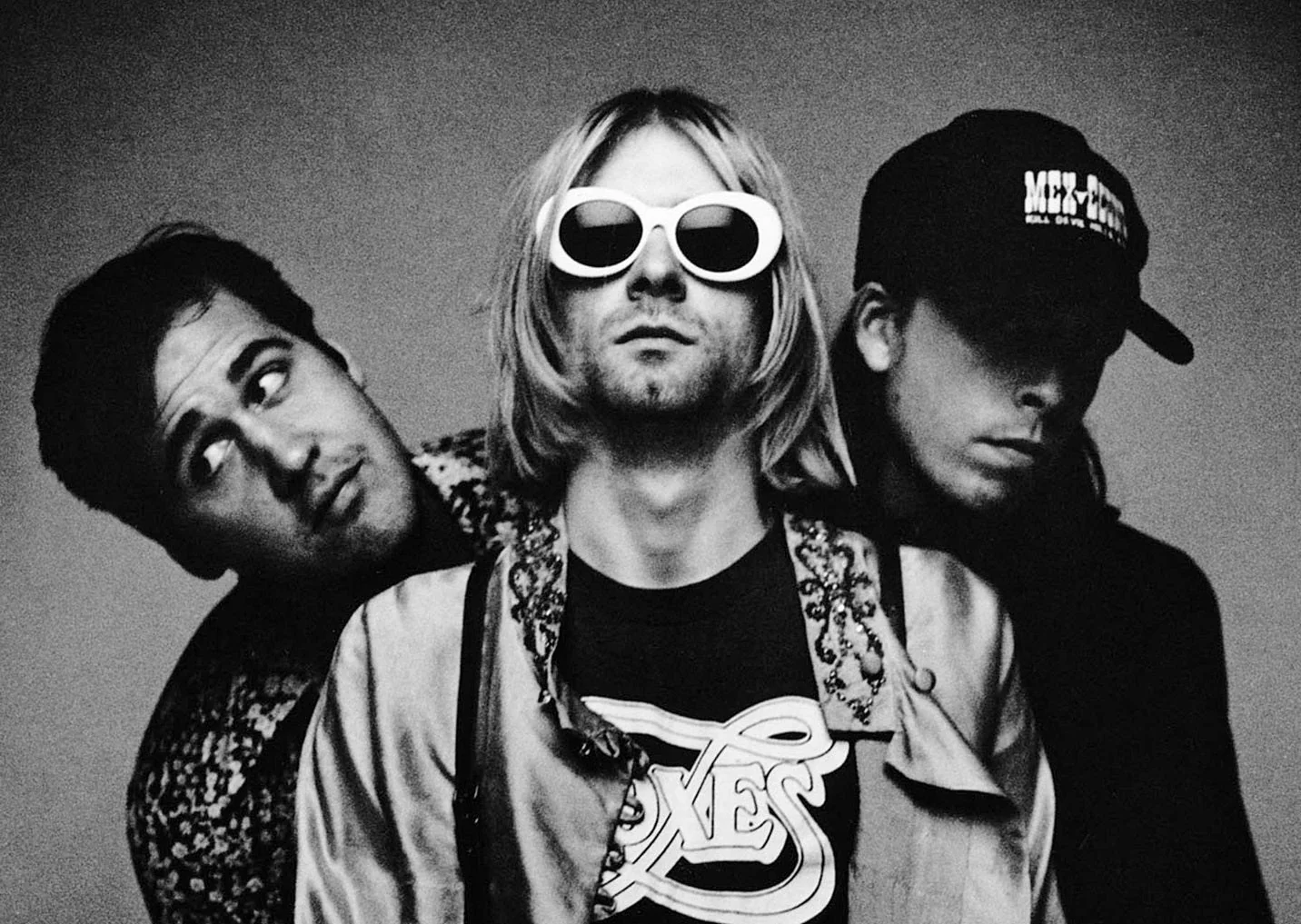
30 Years Later
Was Kurt Cobain Murdered? New Forensic Analysis Shakes the Official Version
April 8, 1994. An electrician discovers the body of Nirvana frontman Kurt Cobain in a room above the garage of his Seattle home. A shotgun. A farewell letter. A high level of heroin in his blood. Police close the case quickly: suicide. But 32 years later, a new forensic study is once again throwing that conclusion into serious doubt.
The Case That Was Never Really Closed
For millions of fans, Kurt Cobain’s death on April 5, 1994 was more than a personal shock — it was the end of an era. The 27-year-old singer, guitarist and songwriter of Nirvana was considered the voice of a generation. His music — raw, vulnerable, furious — struck a nerve that still resonates today.
But questions surrounded his death from the very beginning. Too many inconsistencies, too many loose ends. And now, in February 2026, an independent team of forensic experts has put those questions back on the table — louder than ever.

The New Analysis: “This Was Not a Suicide”
The team led by forensic specialist Brian Burnett and independent researcher Michelle Wilkins spent three days intensively analysing the original 1994 files — autopsy reports, crime scene photographs, toxicological findings, and police records. Their conclusion, accepted for publication in the International Journal of Forensic Science, is explosive: Kurt Cobain may have been murdered.
The Heroin Problem
The team’s strongest argument: the morphine level in his blood. 1.52 mg/L — according to the researchers, three times the lethal dose for an adult, and ten times the typical amount even for experienced heroin users.
Burnett and Wilkins argue that at this concentration, no voluntary motor function would have been possible. Cobain simply could not have shot himself.
The Suspiciously Clean Crime Scene
Toxicology, however, is only part of the argument. Wilkins describes several crime scene anomalies that she interprets as evidence of a staged death:
- No blood traces on Cobain’s left hand — the hand that, according to the suicide theory, held the shotgun
- The heroin kit was neatly packed away — incompatible with the state of someone under extreme drug intoxication
- Purchase receipts for the weapon and ammunition were found tidily sorted in his pocket
- Spent shell casings were arranged in a suspiciously orderly fashion
Wilkins draws a stark comparison: “To me, it looks like someone staged a movie scene and wanted to make absolutely sure this would be perceived as a suicide.”
On top of that, the team offers a reinterpretation of the autopsy findings: necrosis of the brain and liver, along with signs of oxygen deprivation — changes that Wilkins says are more consistent with a heroin overdose than a gunshot wound: “The necrosis of the brain and liver happens in an overdose. It doesn’t happen in a shotgun death.”
The Farewell Letter — Two Different Handwritings?
Contested since 1994: the farewell letter addressed to Cobain’s wife Courtney Love and daughter Frances Bean. The new researchers identify a striking deviation in the handwriting of the final four lines compared to the rest of the letter. Their theory: the letter may have been partially forged — the closing lines added by someone else to make the suicide appear more credible.
Tsokos Announces: “A Completely New Perspective”
Then there is Prof. Dr. Michael Tsokos — Germany’s most prominent forensic pathologist, bestselling author and director of the Institute of Legal Medicine in Berlin. In a short teaser video on his YouTube channel, which also tags the Instagram account @who_killed_kurt_official, he announces that he will be speaking out on the case in an exclusive interview — promising “new findings, new questions, and a completely new perspective on one of the most controversial deaths in criminal history.”
The full interview had not been released at the time of writing. But the mere fact that Germany’s most high-profile forensic pathologist is publicly positioning himself on this case — and doing so in explicit collaboration with the @who_killed_kurt_official account — is likely to bring the story a significant new wave of attention in the weeks ahead. Tsokos has stated elsewhere that he doubts Cobain could still have been capable of action given the heroin level in his blood: “I suspect the [Seattle police] know exactly why” the files remain under lock and key.
The Authorities: Business as Usual
The response from official channels is clear — and predictable. The Seattle Police Department states bluntly: “Our investigation concluded that he died by suicide, and that position continues to be held by this department.”
The King County Medical Examiner’s Office is marginally more open: they are “always open to reconsidering conclusions if new evidence emerges” — but have seen nothing so far that would justify reopening the case.
No new investigation is planned.
Pushback from the Scientific Community: Mark Benecke Weighs In
Not all experts share the excitement. Renowned German criminal biologist Dr. Mark Benecke is sharply critical of the new study. He accuses the team of clear bias — Michelle Wilkins, for instance, runs a YouTube channel that has been critically focused on Courtney Love for years. He also takes issue with the methodological foundation: at its core, he argues, this is a “journalistic text” that, despite its wealth of technical detail, fails to account for the realities of actual crime scenes.
The key weakness, according to Benecke: reliable conclusions would require “high-resolution photographic documentation and a corresponding analysis of blood spatter patterns.” Burnett and Wilkins never examined the crime scene directly — they work exclusively with 32-year-old records and photographs from an era when forensic standards were very different.
Benecke’s verdict: the analysis raises questions — it does not provide answers.
What Remains: The backstory speaks for itself
Those who find the suicide theory plausible have substantial arguments on their side. Kurt Cobain was a severely ill man.
- Long-standing, diagnosed depression
- Chronic stomach problems, self-medicated with heroin
- Years of heroin addiction and multiple failed attempts at rehabilitation
- Just one month before his death: a suicide attempt in Rome, an overdose of Rohypnol and champagne
- Shortly before his death: escape from the Exodus Recovery Center rehabilitation clinic in Los Angeles
- Witnesses describe increasing withdrawal and suicidal statements
Cobain was at the height of Nirvana’s success — and clearly suffering enormously because of it. The farewell letter, in which he describes his disillusionment with the music industry and his own exhaustion, fits this picture.
Forensic experts such as Cyril Wecht, who worked on numerous high-profile American cases, have previously pointed out that in chronic heroin users, tolerance can be extraordinarily high. A morphine level of 1.52 mg/L does not automatically rule out independent action.
A Debate Without End?
The account @who_killed_kurt_official on Instagram is just one example of the enduring fascination this case exerts — and evidently a platform that serious voices like Tsokos are now engaging with. Across social media, fans, theorists and journalists have been debating Cobain’s death once again since February 10, 2026. Hashtags like #JusticeForKurt and #CobainForensics have generated tens of thousands of interactions on X/Twitter.
That is no coincidence. The Cobain case sits at a raw intersection: grief, myth, pop culture and genuine forensic questions overlap in ways that make rational assessment difficult. Add to that the figure of Courtney Love — still one of the most polarising personalities in rock history — who keeps appearing in murder theories as Cobain’s widow, despite no direct evidence ever having been presented against her.
Conclusion: Questions Remain, Answers Do Not
The new study by Burnett and Wilkins is not proof of murder. That needs to be stated clearly. It is a reinterpretation of existing data by a team that — as Benecke rightly notes — appears to have approached the material with a predetermined conclusion. No direct forensic investigation, no new physical evidence, no named suspect.
At the same time, it would be too easy to simply dismiss the anomalies. A morphine level that gives even experienced forensic pathologists pause. A crime scene that strikes some as “too tidy.” Files kept under lock and key. And now a teaser from Prof. Dr. Tsokos promising “a completely new perspective.”
Whether Kurt Cobain died by his own hand on April 5, 1994, or whether someone else pulled the trigger — that question cannot be answered with what we currently know. What we do know: he was an extraordinary artist, a deeply troubled human being, and his death was a tragedy.
The rest remains speculation. For now.