There is no such thing as apolitical
“I’m Not Some Dancing Monkey for Your Entertainment” – Why Metal Must Be Political
Lamb of God frontman Randy Blythe takes aim at the “stay out of politics” crowd. Heaven Shall Burn have been showing how it’s done in Germany for years. And the new album “Into Oblivion” delivers the soundtrack for a scene that needs to pick a side. A commentary on conviction, cowardice, and the question of whether music without an opinion can still call itself metal.
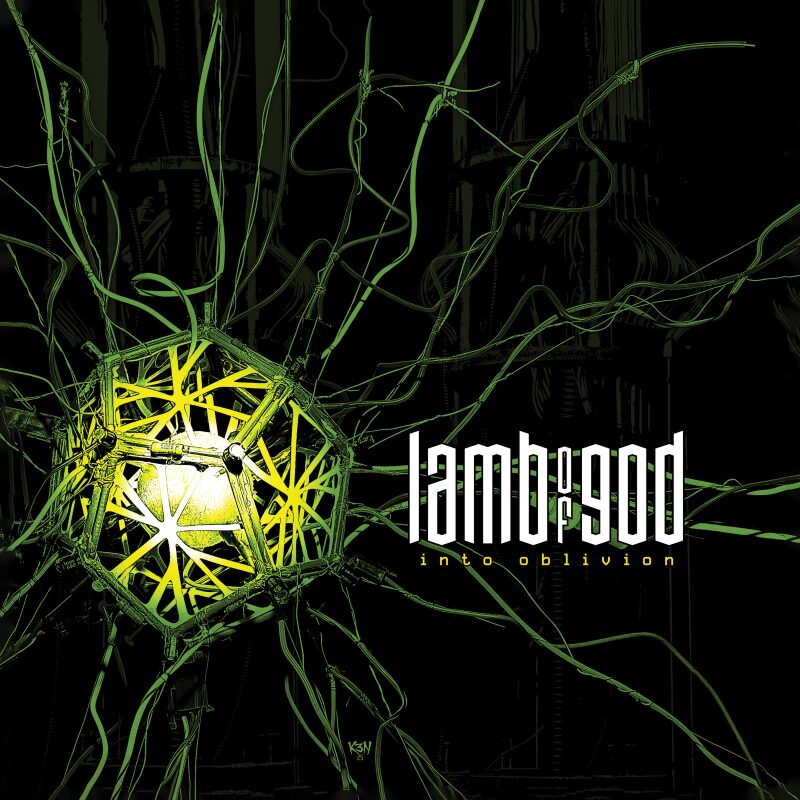
On March 13, “Into Oblivion” drops as the new studio album from Lamb of God, their first in four years. Ten songs, recorded in Richmond, Virginia, at Mark Morton’s home studio and the legendary Total Access Studio in Redondo Beach, where Black Flag, Hüsker Dü, and the Descendents laid down their records. Once again produced by Josh Wilbur. Those are the facts that every other magazine will print too.
But “Into Oblivion” is more than just a new album from a band that has been a fixture of modern metal for over 30 years. It is a statement. And Randy Blythe is making sure nobody can ignore it.

“Because that’s where we’re heading”
That is how Blythe explains the album title. The record, he says, deals with the ongoing breakdown of the social contract, particularly in America. Things are acceptable now that would have horrified people just 20 years ago. This is not a PR talking point. Blythe means every word.
Back in January, the vocalist published a lengthy essay on his Substack newsletter “Randonesia” titled “All the Horrors Happening Around Us.” In it, he takes aim at the Trump administration, ICE operations, and what he describes as the open moral collapse of all three branches of government. His conclusion was unambiguous: resist fascism, do not comply.
If you think that was a one-off outburst, you do not know Blythe. In a recent interview with British magazine Kerrang!, he doubled down. Asked how he responds to people who tell musicians to stay out of politics, his answer was blunt: he is an American citizen, a world traveler, and above all a human being. Not some dancing monkey put here for anyone’s entertainment. Anyone with any sort of moral compass, he argued, acts irresponsibly by not exercising their right to speak up.
The “Shut Up and Play” Lie
It is a debate as old as rock music itself. And it flares up every time artists voice uncomfortable truths. “Shut up and play” was the response to the Dixie Chicks when they spoke out against the Iraq War in 2003. It was the response to Roger Waters, to Rage Against the Machine, to System of a Down.
Here is what makes it so dishonest: metal was never apolitical. Black Sabbath did not write “War Pigs” as a party song. Judas Priest commented on social conditions. Dead Kennedys, Napalm Death, Discharge – the entire crossover and grindcore movement was born from political rage. And Lamb of God themselves? The band whose bassist John Campbell once said they were “a punk rock band who play heavy metal” has been writing political lyrics for decades.
The demand that musicians stay in their lane conveniently only surfaces when the opinion expressed does not match the listener’s own. Nobody complains when Ted Nugent rallies for gun rights. Nobody demands silence when Five Finger Death Punch releases patriotic videos. “Shut up and play” is directed almost exclusively at progressive voices. It is not a demand for neutrality. It is a demand for submission.
The German Lesson: Heaven Shall Burn and the Silence of Others
If you want to see how political metal works without becoming a caricature, you do not need to look across the Atlantic. Heaven Shall Burn from Saalfeld in Thuringia have been showing how it is done for nearly three decades. Songs about Víctor Jara, Thomas Sankara, and Primo Levi. Calls to protest against far-right party conventions. Performances at the “Jamel rockt den Förster” festival against right-wing extremism. And an album called “Heimat” (homeland) that refuses to surrender the concept of home to the political right, choosing instead to reclaim it.
HSB guitarist Maik Weichert has nailed the German version of the “shut up and play” debate in an interview with Musikexpress: if you have a problem with anti-fascists in metal, get rid of fascism in the scene first. Then bands like his will automatically disappear. Anti-fascism, he argued, is a reaction to fascism, not an ideology forced on anyone. Or, as he put it alongside Donots singer Ingo Knollmann in Metal Hammer: anti-fascism is not a political agenda – it is common sense.
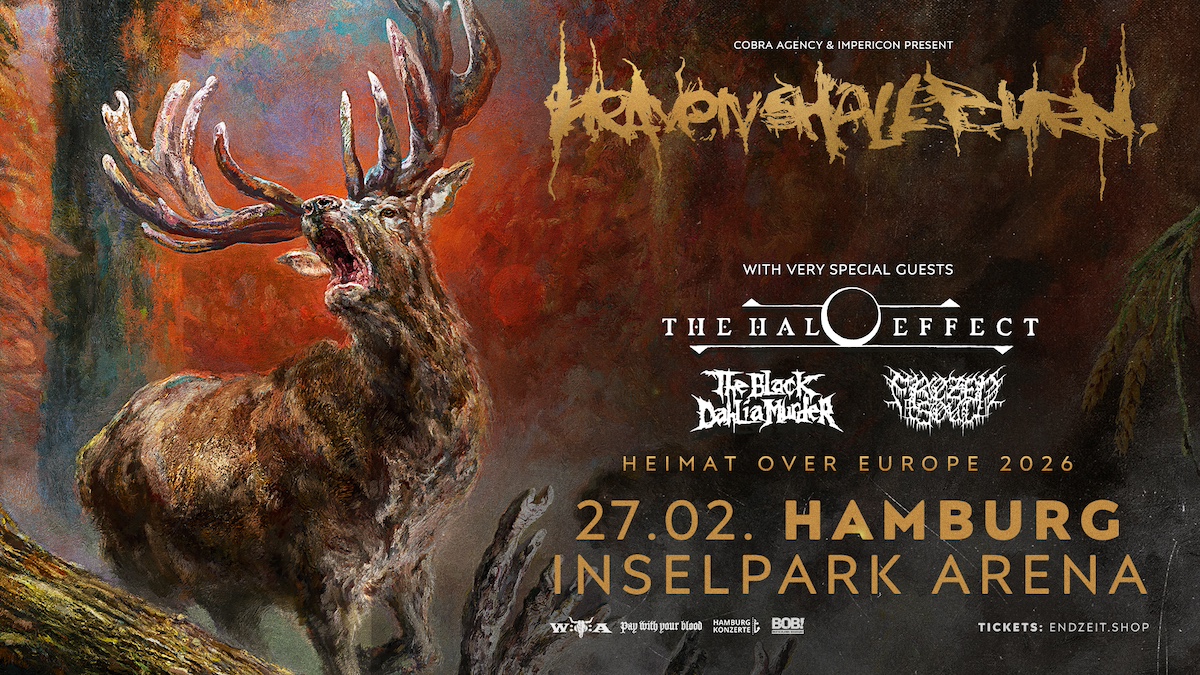
Anyone who caught Heaven Shall Burn on their “Heimat Over Europe” tour in early March – in Hamburg, Stuttgart, Cologne, or any of the other sold-out venues – saw what happens when a band does not just claim to have convictions but lives them. The Donots collaboration “Keinen Schritt zurück” (Not One Step Back) as a statement against the rise of the extreme right. Frontman Marcus Bischoff using the gaps between songs not to push merch but to talk about responsibility. That is not marketing. That is conviction.
And yet: Heaven Shall Burn remain more the exception than the rule in the German metal scene. While Kreator took the stage in anti-Nazi shirts as early as 1993 and bands like Neonschwarz occupy the intersection of punk, hip-hop, and political consciousness, a startling number of German metal acts wrap themselves in diplomatic silence. The fear of losing a portion of the fanbase outweighs the conviction that some things need to be said.
Knollmann put it well: it is cheap to sing about “unity” on stage while refusing to speak up off it and lingering in grey areas. The metal scene’s “united we stand” and “fighting the world” does not end at the fence of the Wacken Open Air.
Conviction Is Not an Album Cycle
What sets Blythe apart from many of his peers, and what connects him to the HSB school of thought, is that his political positions are not tied to a release schedule. He writes regularly on Substack, he has been photographed at Black Lives Matter protests, he has publicly confronted his own battle with addiction. Blythe lives what he preaches.
And he does not demand that you agree with him. In an older interview, he made clear that he defines himself as neither liberal nor conservative. In some respects, he said, he is quite conservative. What drives him is not party allegiance but what he calls empirical truth.
That is the crucial point. It is not about every metal band having to hold the same political position. It is about the fact that silence is a choice. And that choice has consequences.
Blythe puts it more bluntly than most. Anyone willing to look the other way on serious crimes because it might benefit their bank account, he argued, has lost a piece of their humanity. You cannot take your money into the grave – but you will carry the memory of having silently gone along.
You do not have to agree with every word. But you should acknowledge that this is someone with over 30 years of stage experience, who stood trial for manslaughter in the Czech Republic and was acquitted, who went through the hell of addiction and still takes the stage every night. Randy Blythe has been through more than most keyboard warriors who presume to tell him what he is and is not allowed to talk about.
“Into Oblivion” as the Soundtrack of a Fractured Era
The album itself reflects this stance. Track titles like “Parasocial Christ,” “The Killing Floor,” and “Devise/Destroy” hint at where it is headed. Blythe recorded his vocals at Total Access Studio, deliberately choosing a place that stands for uncompromising music. Mark Morton describes the creative process as free from trends and expectations. The only goal, he says, was to make music that they themselves think is good.
Starting March 17, Lamb of God hit the road across North America with Kublai Khan TX, Fit for an Autopsy, and Sanguisugabogg. For the release weekend, listening parties are happening at over 140 independent record stores. No streaming service sponsorships, no 500-dollar VIP packages. Music for the people who carry it.
What This Means for the Scene
We live in a time when armies hijack pop songs for propaganda videos, when rap lyrics are weaponized in courtrooms as evidence of criminal intent, when governments instrumentalize art to normalize violence. In such a time, asking “Is metal allowed to be political?” is not just naive. It is dangerous.
The better question is: can metal afford not to be?
Randy Blythe has given his answer. Heaven Shall Burn have been giving theirs for nearly 30 years. Both are loud, both are clear. One will be on record starting March 13. The other still echoes through the halls of the “Heimat Over Europe” tour.
The question that remains is how many in the scene have the courage to follow their lead. And how many would rather keep headbanging in silence, hoping nobody asks them where they stand.
“Into Oblivion” is out March 13, 2026 via Century Media / Epic Records.