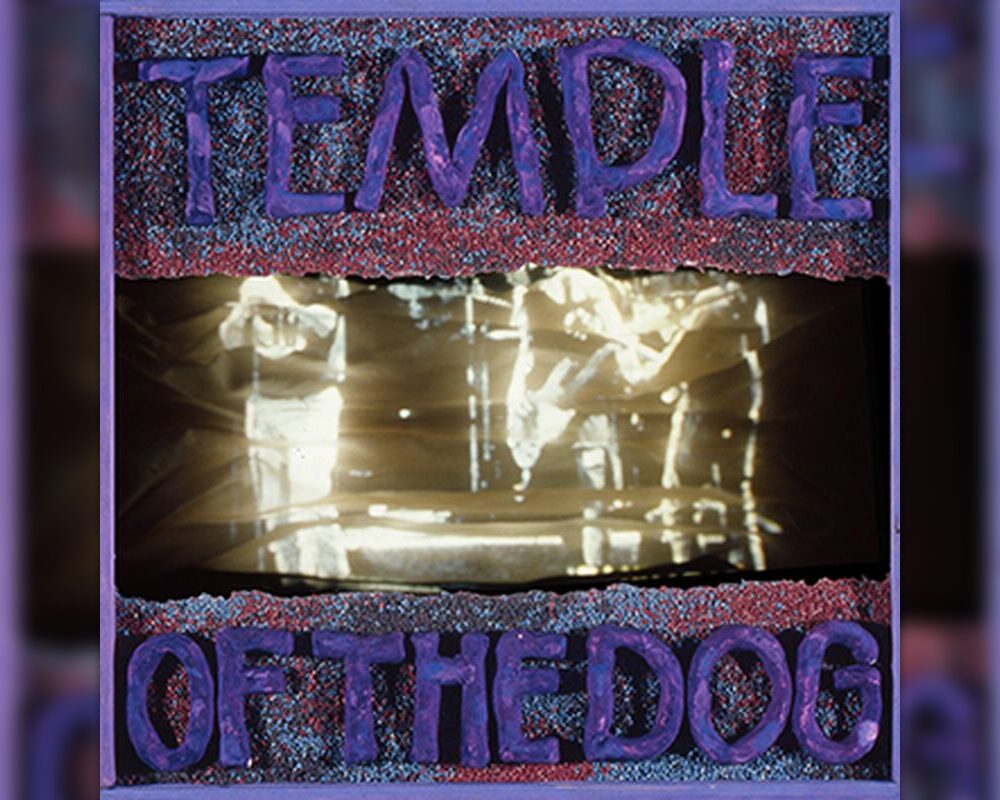
35 Years of Temple of the Dog
Temple of the Dog – The Album Born from Grief That Launched an Era
Temple of the Dog – The Album Born from Grief That Launched an Era
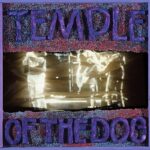
On April 16, 1991, an album no one had expected appeared – recorded in 15 days, born from the death of a friend, played by musicians who would soon reshape the rock landscape of the nineties. 35 years on, Temple of the Dog is more than a tribute album. It is a document about friendship, loss, and what happens when grief meets talent.
On March 19, 1990, Andrew Wood was pronounced dead at Harborview Medical Center in Seattle. He was 24 years old. Three days earlier, his fiancée Xana Lafuente had found him unconscious – a heroin overdose that caused hypoxic encephalopathy. Wood’s band Mother Love Bone had been on the verge of breaking through: their debut album Apple was finished, and the New York Times would later call it “one of the first great hard-rock records of the 90s.” It was released posthumously.
For Chris Cornell, Soundgarden’s vocalist and Wood’s roommate, his friend’s death marked the beginning of a period he later described matter-of-factly: “I figured it would be this great thing, because I would be away from home and I wouldn’t have to look at places where I saw him. But it was awful because I couldn’t talk to anybody. So I started writing songs.”

Two Songs That Became an Album
What Cornell wrote on Soundgarden’s European tour was originally meant to be a single – two tracks, recorded with Wood’s former bandmates Stone Gossard and Jeff Ament. “Say Hello 2 Heaven” was the direct farewell, “Reach Down” an eleven-minute dream told from the perspective of the dead. But when the musicians convened at London Bridge Studios in Seattle in November 1990, the project outgrew its original scope.
They borrowed the band name from a lyric in Mother Love Bone’s “Man of Golden Words”: Seems I been living in the temple of the dog. A tribute to the dead, inscribed in the name itself.
The lineup read like a map of Seattle’s scene in flux: Cornell on vocals, Gossard and Ament on guitar and bass, Soundgarden drummer Matt Cameron, and the young guitarist Mike McCready, who had just returned to Seattle after his band Shadow dissolved. Producer Rick Parashar – who would soon go on to record Pearl Jam’s Ten and Alice in Chains’ Sap – handled engineering, mixing, and played piano.
A&M Records financed the sessions but stayed out of the creative process. Stone Gossard recalled: “The whole situation was just so non-pressure filled. Nobody expected this to be anything, so when we just went in and did it, the record company wasn’t around.” Cornell put it more bluntly: “There was no concern about whether it would be good or not, we didn’t even care, we just wanted to try it, which is probably why it’s good.”
The Unknown from San Diego
On October 8, 1990 – right in the middle of preparations for the Temple of the Dog sessions – a 25-year-old from San Diego landed at Seattle’s airport. Eddie Vedder had been flown in to audition as singer for Gossard, Ament, and McCready’s new project, then still performing under the name Mookie Blaylock. Vedder dropped by a Temple of the Dog rehearsal and spontaneously contributed backing vocals.
On “Hunger Strike,” the guest became an equal partner. Cornell had written the song as the tenth track – he didn’t like having an odd number of songs – and was struggling with the low passages. Vedder took them over instinctively. Cornell: “He sang half of that song not even knowing that I’d wanted that part to be there and he sang it exactly the way I was thinking about doing it, just instinctively.” Vedder described the moment more modestly: “I just kind of stepped up and did it. And I remember being a little nervous about doing it, but he was really happy about how it sounded.”
It was Vedder’s first recording for a major label. Two weeks later, he played his first concert with Mookie Blaylock at the Off Ramp Café. Mookie Blaylock became Pearl Jam.
15 Days, 10 Songs
The album was made in 15 days between November and December 1990. Ten songs, all lyrics by Chris Cornell. He shared the music with Gossard and Ament, who contributed three tracks – among them “Times of Trouble,” on which Cornell played harmonica, and the dark “Four Walled World” about addiction and confinement.
Jeff Ament summed up what the sessions meant for him and Gossard: “It was a really good thing at the time for us too, because Stone and I were still trying to figure out what the hell we were doing.” Gossard later called it “the easiest and most beautiful record that we’ve ever been involved with.”
For Mike McCready, “Reach Down” was a defining moment. The eleven-minute track contained his first recorded lead on an album. “I was so excited. I’d been in a studio before, but never to record an album or anything. I did that in one take!” Cornell had to encourage him to take up space: “You almost kind of had to yell at him to get him to realize that in the five-and-a-half-minute solo, that was his time and that he wasn’t going to be stepping on anybody else.”
An Album Released Twice
Temple of the Dog hit stores on April 16, 1991, via A&M Records. It sold around 70,000 copies and failed to chart. Reviews were favorable – AllMusic gave it 4.5 out of 5 stars, Rolling Stone 4 out of 5 – but commercial traction remained elusive.
Then Soundgarden and Pearl Jam exploded. Ten in August 1991, Badmotorfinger in October of the same year – suddenly A&M Records had a collaboration between the two biggest bands of the moment sitting in their catalogue. In the summer of 1992, the album was reissued. “Hunger Strike” got a music video – directed by Paul Rachman at Discovery Park in Seattle, the band with their backs to the camera, facing Bainbridge Island, Andrew Wood’s home. A silent farewell at sunset.
Success arrived late and hard: number 5 on the Billboard 200, “Hunger Strike” at number 4 on the Mainstream Rock charts. The album went platinum in the US and Canada, became one of the hundred best-selling albums of 1992. Over a million copies in the United States alone.
The Scene That Didn’t Tear Itself Apart
Temple of the Dog was more than a tribute album – it was proof that the Seattle scene operated by different rules than the music industry was used to. Four of Pearl Jam’s eventual five members stood alongside Soundgarden’s singer in the studio, and no rivalry narrative emerged. Cornell reflected on this later: “The camaraderie and the healthy competition part, I found later was unusual.” He recounted how even Johnny Ramone had remarked on the friendship between Pearl Jam and Soundgarden – in the competitive punk scene of the East Coast, it would have been unthinkable.
The grief over Andrew Wood connected Seattle’s musicians across band lines. Alice in Chains paid tribute to the dead singer in the liner notes of their debut Facelift. Jerry Cantrell wrote “Would?” as a tribute. Candlebox’s Kevin Martin processed the loss of his friend in “Far Behind.” Even L.A. band Faster Pussycat recorded an elegy with “Mr. Lovedog.”
25 Years Later: Eight Nights
In November 2016, for the album’s 25th anniversary, Temple of the Dog played their first proper tour – eight shows across five cities, from Philadelphia to Seattle. Brendan O’Brien had remixed the album for a reissue. Eddie Vedder was not among them, citing family commitments.
On November 21, 2016, at Seattle’s Paramount Theatre – the final show – the audience sang Vedder’s part on “Hunger Strike.” Cornell dedicated the song to him. Before the last number of the evening, he told the crowd: “One more song and then, who knows, maybe we’ll play this again. Then we’ll go on a massive world tour! But we’re not going to. But you never know.”
Every night ended with “All Night Thing.” Every ticket directed $1.50 each to the Chris and Vicky Cornell Foundation and Pearl Jam’s Vitalogy Foundation.
One Last Goodbye
Six months later, on May 18, 2017, Chris Cornell died in Detroit. He was 52 years old. Seattle’s Space Needle went dark for an hour on the evening of his death.
At his funeral at Hollywood Forever Cemetery, “All Night Thing” accompanied the mourners on their way to the grave. Chester Bennington, who had sung “Hunger Strike” with Cornell night after night on the 2008 Projekt Revolution tour, performed Leonard Cohen’s “Hallelujah” alongside Brad Delson. Two months later, on July 20, Bennington was dead too.
Eddie Vedder found words for Cornell at a solo concert in London on June 6, 2017: “He wasn’t just a friend, he was someone I looked up to like my older brother.”
What Remains
Temple of the Dog is an album that grew from a specific loss and absorbed ever more loss over time. What began in 1990 as a farewell to Andrew Wood became, through Chris Cornell’s death, a double monument – a tribute written by a man who would himself leave far too soon.
Gossard was right: it was the easiest and most beautiful record he had ever been involved with. Perhaps precisely because of that. Nobody was trying to prove anything. Nobody expected success. Five musicians and an unknown from San Diego gathered around the death of a friend and made, in 15 days, an album that David Fricke in Rolling Stone placed within “the final major pop rebellion of the twentieth century” – and that none of them had planned.
Cornell put it plainly: “Temple was about making an album simply for the joy of doing it. We weren’t concerned what anyone outside of our group would think.”
35 years later, over 300,000 people listen to these ten songs every day. “Hunger Strike” alone has racked up nearly 300 million Spotify streams. The numbers are beside the point. What matters is what AllMusic critic Steve Huey wrote about the album: that it is permeated by a “definite, life-affirming aura” – despite everything.