Second postponement, same cause, no answers
Dogma and the Visa Problem: When Management Becomes a Pattern
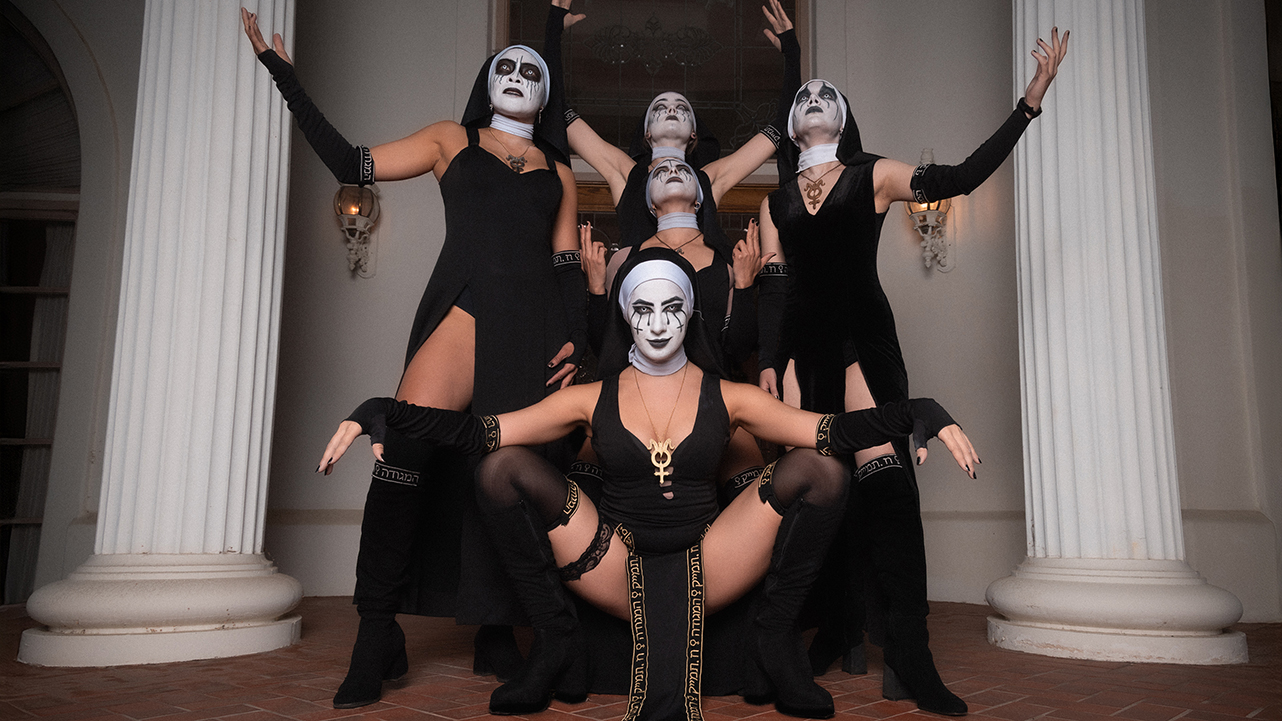
Dogma have postponed their US tour. One day before the planned start on March 15 in Seattle, the band published a statement on their social media channels: unforeseen delays in the visa processing timeline. All purchased tickets remain valid, rescheduled dates to follow. The usual wording, the usual disappointment.
But nothing about Dogma is usual. And this postponement is far more than bureaucratic bad luck.
A Pattern, Not an Isolated Incident
Anyone who has been following Dogma’s story will find the visa issue familiar. In October 2025, former guitarist Patri Grief (Rusalka) described in a detailed statement how she was let go from the band because management had failed to provide proper work visas. Grief reported that she and a planned new vocalist flew to the US, were interrogated and detained at the airport for 48 hours, then sent back. Their phones, belts, earrings, even their shoelaces were confiscated.

What happened next says more about the structures behind Dogma than any tour poster: the moment Grief got her phone back, a message from management was waiting, asking her to teach the songs to her replacement. No apology. When Grief confronted management about the 48-hour detention, the response was reportedly that nobody had forced her. She had been caught because she was wearing a Pirate Queen t-shirt under her hoodie.
Another former member was reportedly dismissed simply for asking for the correct work visa. The message, according to multiple former members, was clear: either you go on tour without a proper visa, or you get replaced.
The fact that Dogma are now, months later, failing at exactly the same problem raises questions that go beyond bureaucratic misfortune. Did management learn from the experiences of 2024 and 2025? Were the correct visas applied for this time? And if so, why did they not come through in time?
Dogma and their management company IDL Entertainment have not substantively responded to the allegations. The last official statement addressing the accusations from former members dates to October 27, 2025. Since then: silence.
The Exodus Behind the Masks
The visa story is just one thread in a larger web. In autumn 2025, the dam broke: vocalist Grace Jane Pasturini (Lilith), guitarist Amber Maldonado (Lamia) and guitarist Patri Grief (Rusalka) left Dogma and levelled serious accusations against the management. They spoke of unilateral decisions, broken promises, manipulation, gaslighting and the treatment of band members as disposable figures.
Grief described tour conditions where members received only two meals per day because management refused to fund a third. Maldonado reported being forbidden from wearing shorter heels because she would look too short next to Rusalka, despite having sprained her ankle at a show in Uruguay. Vocalist Kim Jennett, who was lined up for the Lilith role, declined and called the contract presented to her exploitative. Her lawyer reportedly used the words slave labour.
At least nine musicians have cycled through the lineup since the band’s formation, according to reports. Many changes were made without announcement. Australian promoter Hardline Media cancelled the planned Australian tour, stating they only wanted to promote the band they and the fans thought they were getting. Tickets from that tour were subsequently made valid at select shows by VindictA, the new project formed by the departed members Pasturini, Maldonado and Grief.
The Bigger Picture: Fortress America
As problematic as Dogma’s internal situation may be, the visa postponement does not exist in a vacuum. International bands are increasingly struggling to perform in the US, and the problem has intensified massively over the past two years.
The numbers speak for themselves: the US agency USCIS raised visa fees in April 2024 from $460 to over $1,615 per application. An increase of more than 250 percent. Processing times that once stood at one month now stretch to three to eight months, depending on location. And that is just the application itself, before legal fees, union letters, flights and the rest of the logistics.
K-pop group KARD cancelled their 2025 US tour. Canadian metal band Respire did the same. British punk legends UK Subs were turned away at the border in March 2025 after an eleven-hour flight. Bassist Alvin Gibbs was detained for 25 hours before being deported. British post-punk band Dry Cleaning postponed their North American tour in late 2025 because their visas did not arrive in time and the costs of express processing exceeded their budget. FKA Twigs had to cancel US shows in 2025 because production had filed the wrong paperwork.
NPR, Rolling Stone and the Associated Press have documented the issue extensively. The consensus is clear: the US is one of the most expensive, bureaucratically burdensome and unpredictable countries in the world for international musicians to enter. And under the tightened immigration enforcement since early 2025, the situation has deteriorated further.
Metal Injection, in their coverage of the Dogma postponement, posed the question the entire festival industry needs to ask itself ahead of summer 2026: is this going to be the new normal? Will festivals lose international acts en masse because visas fail to come through in time?
Two Questions, One Band
With Dogma, two problem levels overlap that must be kept apart but cannot be separated.
The first question is systemic: US visa policy affects all international bands, regardless of their internal situation. Rising costs, longer processing times, unpredictable border controls. This is a real problem that destroys real careers and one the entire music industry should be fighting against.
The second question is specific: did Dogma’s management file the visa applications correctly and in time? Given the documented history in which former members report being sent to the US without proper work visas, this is not a rhetorical question. It is one that management should be answering.
Dogma’s statement speaks of unforeseen delays. The fans who were waiting for this tour deserve a more precise explanation. And the musicians currently in this band deserve the assurance that their management has learned from the past.
Because if the visa problem at Dogma is truly a pattern and not just bad luck, then an uncomfortable question arises: how many times does the same problem have to repeat itself before someone takes responsibility?