Opinion
Streaming Summit at the Chancellery: ROKK Shows How Fair Streaming Can Work
While Spotify and friends keep cashing in, a German start-up born from the metal scene is fighting for fairer compensation for musicians. On Monday, ROKK presented its model at the Federal Chancellery in Berlin. And for the first time, the German government is signalling: if the industry doesn’t act on its own, politics might.
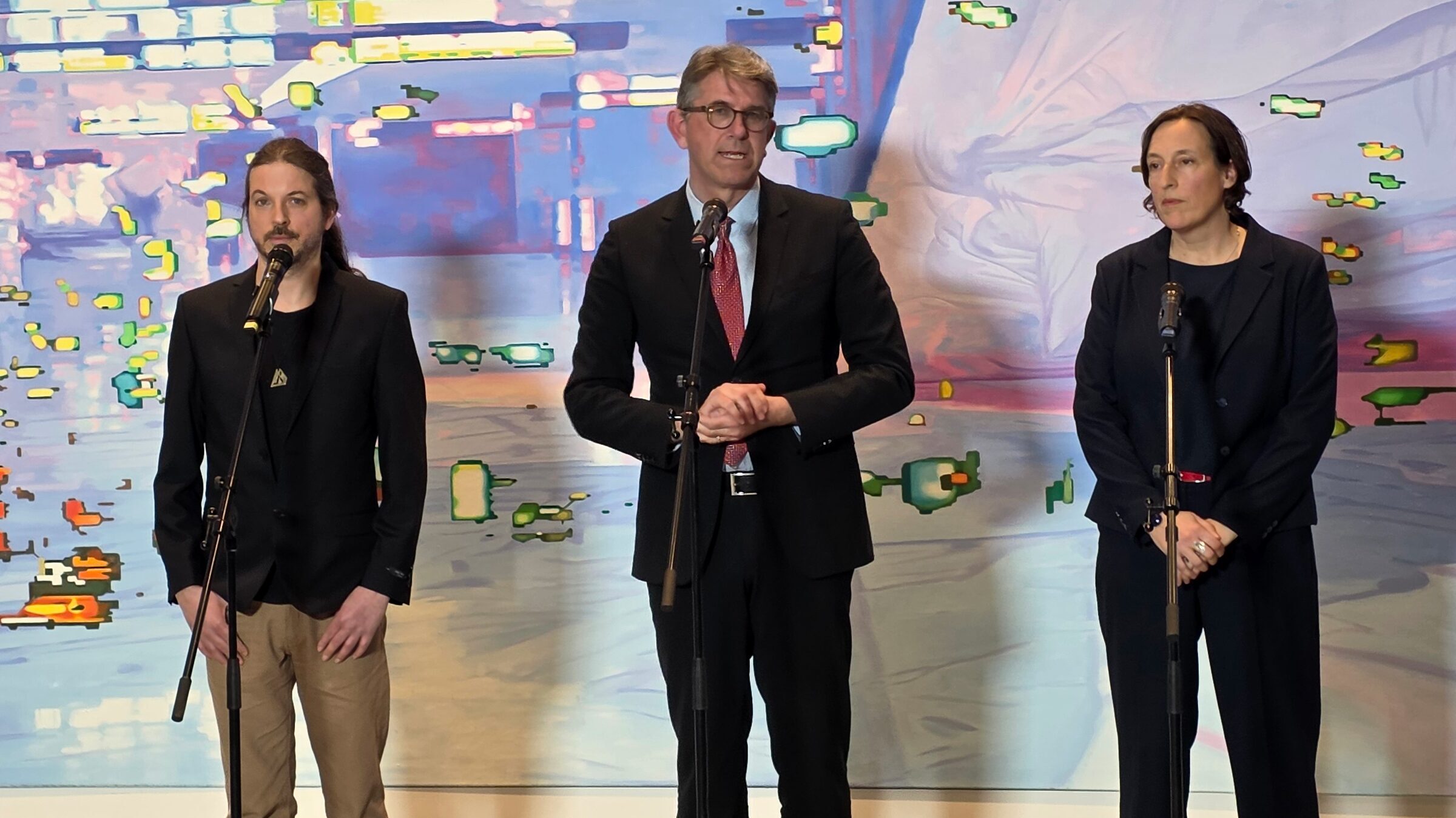
On March 16, 2026, the third round of the so-called streaming summit took place at the Federal Chancellery. State Minister for Culture and Media Wolfram Weimer had invited representatives of major streaming platforms: Amazon Music, Apple Music, SoundCloud, Spotify and YouTube Music were at the table, along with digital industry association Bitkom. And right in the middle, listed alphabetically between Apple Music and SoundCloud: ROKK Streaming, a German start-up founded by two musicians from the metal scene.
Three Rounds, One Problem
Monday’s meeting was the third in a series of talks Weimer has been conducting since December 2025. In the first round, he spoke with musicians including Herbert Grönemeyer, Peter Maffay and Balbina. On March 12, a meeting followed with representatives from the label side, including Sony Music, Universal Music Group, Warner Music Group, BMG and independent labels such as Audiolith, CitySlang and Staatsakt. Now it was the streaming services’ turn.
Herbert Grönemeyer was present once again and criticised the existing system. His point: the money listeners pay monthly for their subscription doesn’t necessarily end up with the artists whose music they actually play. Instead, it is distributed according to a formula that primarily benefits mainstream acts with high overall stream counts.
The Numbers Paint a Brutal Picture
Behind this political initiative is a study by the Forschungsnetzwerk Digitale Kultur (Digital Culture Research Network), published in February 2025. The project was funded between 2022 and 2025 by then-State Minister for Culture Claudia Roth. The findings are stark: in 2023, 75 percent of streaming revenue went to just 0.1 percent of artists. At the other end of the scale, 68 percent of all artists generated less than one euro in revenue. More than 74 percent of the roughly 3,000 musicians surveyed said they were dissatisfied with their streaming income.
The core issue is the so-called pro-rata model used by virtually all major platforms. Under this system, all subscription revenue for a given month is pooled and then distributed based on each artist’s share of total streams. In practical terms: if you listen exclusively to metal, your subscription money still partly finances Taylor Swift, because she commands the largest share of the overall pool. For niche genres like metal, gothic, progressive rock or politically engaged hip-hop, the system is structurally disadvantageous.
ROKK: Metal Musicians Take Matters Into Their Own Hands
This is exactly where ROKK comes in. FAIRMUSIC (now a publicly traded AG) was founded in 2020 by Alexander Landenburg (drummer for Kamelot and Cyhra) and Peter Moog (guitarist for Mentalist). The two have known each other since their youth in the metal scene of Germany’s Saarland region and have experienced the problems of the streaming market firsthand. Even an internationally touring musician like Landenburg, who regularly plays the world’s biggest stages with Kamelot, cannot live on streaming income alone.
ROKK’s model differs from Spotify and its competitors in several key ways:
First, the platform specifically targets fans of rock and metal (while still offering a complete music catalogue). This focus means that the community’s subscription money stays within the community rather than disappearing into the mainstream pool. ROKK states that per-stream payouts are two to three times higher than the competition’s, with initial data suggesting figures as high as four to five times.
Second, listeners can allocate up to ten percent of their subscription fee directly to their favourite artists through a feature called “Direct Artist Support.” This isn’t a marginal tipping feature but a core part of the platform’s architecture.
Third, bands can upload their music to the platform for free and without middlemen (meaning no distributors like DistroKid or TuneCore).
Fourth, AI-generated content is either labelled or removed from the platform entirely, and is never promoted algorithmically. Given the growing flood of AI music in the catalogues of major platforms, this point is becoming increasingly relevant.
ROKK co-founder Peter Moog summed it up for stagedive.net: “If streaming is the future of music, then that future should belong to the people who make the music.”
Weimer Does Not Rule Out Political Intervention
Following the meeting, State Minister Weimer announced a round table for early summer, where all three sides would sit together as equals for the first time: musicians, labels and streaming services. The goal is an industry-wide agreement. Notably, Weimer explicitly added: should no solution be found, the question of whether politics might possibly need to intervene would also be on the table.
This is new territory. Until now, German politics has limited itself to studies and dialogue formats on the topic of streaming compensation. The fact that a State Minister for Culture is now openly floating regulatory measures shows how seriously the situation is being taken. Weimer emphasised that the German music market is one of the largest in the world and that it is in the interest of politics for this market to keep growing. At the same time, he said, improvements are needed in compensation, transparency, the fight against streaming fraud, and the handling of AI.
Susanne Dehmel from industry association Bitkom signalled a general willingness from the platforms to talk, but also made clear: when discussing changes to compensation models, the conversation is not about distributing more money, but about redistribution. This caveat matters, because it reveals that the major platforms are not prepared to give up their share. The question is not whether more money enters the system, but whether the existing money gets distributed more fairly.
Why This Matters to Every Metalhead
You don’t need to be an industry expert to understand what’s at stake. The current streaming system is designed to favour the mainstream and disadvantage niches. Every euro a metal fan pays for their Spotify subscription flows, in significant part, to artists that fan has never listened to. This is not just unfair; it threatens cultural diversity in the long run, because it becomes harder and harder for bands in niche genres to make a living from their music.
The fact that two metal musicians have built an alternative with ROKK that made it all the way to the Federal Chancellery is remarkable. That ROKK is positioning itself as a European countermodel to the US-dominated streaming landscape adds a further political dimension.
Whether the round table this summer will actually produce an industry agreement remains to be seen. Power structures in the streaming market are entrenched, and the major labels benefit from the pro-rata system just as much as the platforms do. But the mere fact that this issue is now being negotiated at government level, and that a State Minister for Culture is no longer ruling out regulatory consequences, is progress. And ROKK demonstrates that it doesn’t have to stop at lip service: a fair streaming model already exists. It just needs to be used.
Sources
Streaming summit at the Federal Chancellery, March 16, 2026: Official press release by the Federal Government Commissioner for Culture and Media (BKM): kulturstaatsminister.de Press release on bundesregierung.de: bundesregierung.de
BKM study “Compensation in the German Music Streaming Market” (February 2025): Press release and study download: kulturstaatsminister.de/musikstreaming Full study (PDF, in German): kulturstaatsminister.de (PDF)
Second meeting with labels, March 12, 2026: Report by Initiative Urheberrecht: urheber.info
First meeting with musicians (December 2025): taz report: taz.de
ROKK Streaming / FAIRMUSIC AG: Official website: rokk-app.com FAQ with explanation of the compensation model: rokk.app/faq
MusikWoche background report on ROKK: musikwoche.de
Metal Hammer coverage: metal-hammer.de