The Forgotten Generation
When German Crossover Still Filled the Venues
Between 1992 and 2006, a generation of German bands blended metal with hip-hop, punk with rap, hardcore with groove – and filled clubs and venues across the country. Then it vanished. Not with a bang, but quietly, band by band. Almost nothing googleable was left behind. A search for traces in a musical landscape that existed before the internet.
Such A Surge. Type the name into a search engine. What comes back? A Wikipedia entry that looks like someone last touched it in 2014. An official website standing there like a memorial, complete with a concert list dating back to 1993. A handful of forum posts from people who remember shows whose photos are sitting in shoeboxes. That’s it.
A band from Braunschweig, northern Germany, that toured with Biohazard and Dog Eat Dog, opened for Herbert Grönemeyer – one of Germany’s biggest artists – and released records on Nuclear Blast. Yet they’ve left fewer traces online than a provincial cover band.

Such A Surge aren’t an exception. They’re the norm for an entire scene.
My First Concert Was Called Crossover
1995, sometime in autumn or winter. The Welcome in Hützel, a tiny village in the Lüneburger Heide – a rural stretch of northern Germany where bands have been playing since the seventies, bands that had no business being there. Kraan, Embryo, Herman Brood – and on this particular night: H-Blockx.
I was seventeen. What I knew: “Move” was on heavy rotation on VIVA, Germany’s answer to MTV. The guys were from Münster, and the Welcome was a ten-minute bike ride from my house. What I didn’t know: that this night would be the beginning of everything.
H-Blockx were still playing with Dave Gappa on vocals alongside Henning Wehland back then. “Time to Move” was a year old and had sold over 750,000 copies, but in this small club in the middle of nowhere, none of that mattered. What mattered was the sound: guitars that sounded like metal, vocals that switched between rap and singing, and an energy that nobody had ever described to me – because you can’t describe it. You have to be in it.
I was in it. And after that, one thing was clear: more of this.
What Crossover Was – and How It Sounded
Crossover wasn’t a German invention. Rage Against the Machine, Faith No More, Body Count, Biohazard – the blueprints came from the US. But what happened in Germany from the early nineties onward was more than a copy. It was its own scene with its own sound and its own rules.
H-Blockx were the commercial breakthrough. “Risin’ High” sold 10,000 copies in 1993 through word of mouth alone, before the band even had a proper record deal. “Time to Move” went platinum. But H-Blockx were just the tip of the iceberg.
Underneath, things were brewing. Such A Surge from Braunschweig sang in German, English, and French, rooted in both the hardcore and hip-hop scenes simultaneously. Their first EP was called “Gegen den Strom” – Against the Current – and the title said it all.
Thumb, from the same circles, delivered a programmatic song title with “Fascism Sucks” – which in the nineties wasn’t a statement so much as a given. If you were part of this scene, you were anti-fascist, and that was as non-negotiable as the bass being loud.
Then there were Blackeyed Blonde from Saarbrücken, whose 1994 album “Masafagga” caused outrage with a vibrator from the Quelle catalog on its cover – Quelle being Germany’s biggest mail-order retailer at the time. The Freaky Fukin Weirdoz, pioneers of the entire genre in Germany. Headcrash. Mr. Ed Jumps The Gun. From Sweden came Clawfinger, who were bigger in Germany than in their home country. From New Jersey came Dog Eat Dog with their saxophone and the attitude of a skate crew on a field trip.
From the Netherlands, Urban Dance Squad, who were putting crossover on stage before the term had even caught on.
And on the fringes, in the same orbit: German punk – Slime, Wizo, Terrorgruppe. Early German hip-hop – Fettes Brot, Absolute Beginner, who were just starting to build a scene of their own. German hip-hop and German crossover were born at the same time, and the audience was often the same. The people who went to crossover shows were at a punk gig the weekend before and at a hip-hop jam the weekend after. The genre boundaries that are now cemented in Spotify playlists didn’t exist in these clubs.
Just how naturally crossover worked in both directions was demonstrated in 1994 by, of all people, Die Fantastischen Vier – Germany’s biggest hip-hop group. They went into the studio with Frankfurt thrash band Megalomaniax and re-recorded their own hits as crossover tracks, with distorted guitars and double the tempo. “Die Da” – their signature hit – became “Ideal Die Da.” 80,000 people bought the album. When even the Fanta 4 were playing metal, crossover was no longer a niche phenomenon.
The Revolving Door
The scene was small enough that everyone knew everyone, and porous enough that musicians constantly switched bands. Steffen Wilmking played drums for Thumb before joining H-Blockx. Marco Minnemann came from the Freaky Fukin Weirdoz and sat down behind the same kit. Fabio Trentini produced the Guano Apes and the Donots and started playing bass for H-Blockx in 2003.
Such A Surge toured with Biohazard and Dog Eat Dog. H-Blockx toured with Biohazard and Bon Jovi. The same names keep popping up on concert bills across the entire scene. Know one band, know three. Go to one show, go to ten.
VIVA, Fanzines, and the Dubbed Cassette
How did you discover a band like Thumb in 1995? Not through an algorithm. VIVA and MTV played the big names – H-Blockx, Clawfinger, Dog Eat Dog. For everything below that, you needed other channels.
You bought VISIONS or Musikexpress – Germany’s equivalent of Kerrang! or NME – at the newsstand and read reviews of records you couldn’t afford. You ordered fanzines by mail – photocopied A5 booklets where people with more enthusiasm than spelling skills wrote about shows in youth centres. Sometimes you went to a concert because the flyer was hanging in the record shop, and you discovered the opening act. Or you borrowed a cassette from someone who knew someone who’d seen the band play once.
Discovering music was slow. It was physical. It was social. You had to go out. And that’s exactly what made the scene so tight-knit. Anyone who made the effort to attend a crossover show at a youth club usually stuck around.
On March 27, 2004, Such A Surge played the Garage in Lüneburg. Schwarzer Krauser Nachtzeche Tour. Free admission. I was there. The band was there. Less than two years later, they played their last concert at the Jolly Joker in Braunschweig, the city they came from. Between my first crossover concert at the Welcome and the end of Such A Surge lay nine years. The entire life cycle of a music movement, witnessed within a forty-kilometre radius.
What Killed the Sound
Crossover didn’t die from a single blow. It was a slow fade. In the late nineties, nu metal steamrolled everything – Korn, Limp Bizkit, Linkin Park were the new giants, and they had budgets a band from Braunschweig would never see. The sound got slicker, the grooves heavier, the rap parts formulaic. What had grown organically out of the hardcore scene with Such A Surge became a gimmick with Limp Bizkit.
The German bands reacted differently. Such A Surge tried opening up toward the mainstream with “Was Besonderes” in 1998, returned to their roots with “Alpha” on Nuclear Blast in 2005, and then called it quits. H-Blockx released “HBLX” in 2012, their last album, and disappeared into a silence that would last fourteen years. Thumb were already gone. Blackeyed Blonde too.
Not everyone vanished. Dog Eat Dog from New Jersey are still touring – I photographed them in 2023 at the Streetz Open Air, Free Radical Tour, and the saxophone sound was still the same. But they’re the exception, not the rule.
By 2006, the German scene was history. Not with a farewell concert at Wembley Stadium, but with a final gig at the Jolly Joker in Braunschweig, in front of people who still remembered what it was all about.
What Remains When Everything Was Offline
What’s remarkable about this scene isn’t that it disappeared. Music movements come and go. What’s remarkable is that it left almost no traces behind.
The crossover era took place in the pre-internet age. There are no concert photos on Instagram, no tour reports on blogs, no digitised interviews. The flyers are in shoeboxes, the photos are stuck in albums (if there are any at all), and the fanzines ended up in the recycling. No research intern can reconstruct this, because the sources simply aren’t online.
What does exist: memories. In forums like those of VISIONS or Metal Hammer, threads pop up now and again where people ask about “90s German crossover” and shout band names at each other. “I loved Thumb, especially live,” someone writes in the VISIONS forum. Someone else remembers the “Thumb Army,” the unofficial fan club. And every time, it reads like a reunion of people who lived through the same thing and are glad someone else still knows.
Solitary Man Records, Münster, 2026
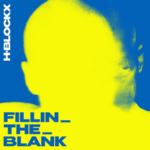
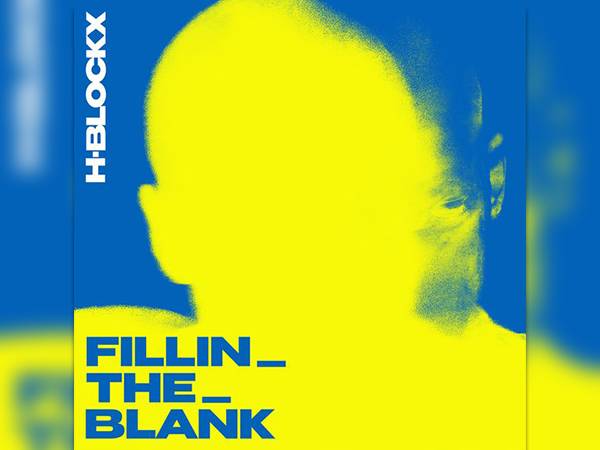
Thirty years after “Time to Move,” H-Blockx release a new album. “Fillin_The_Blank,” eleven songs, 32 minutes, out on Solitary Man Records – the label run by the Donots, one of Germany’s most enduring punk bands. Ingo Knollmann of the Donots calls it “the band’s second album.” Henning Wehland says: “It took us 30 years to try every other path, and now we’ve understood that this is our DNA.”
H-Blockx are the only German band from the crossover generation that still exists. Not as a nostalgia project, not as a reunion cash grab, but as a band that recorded an album after fourteen years of silence and is touring on it. Rock am Ring, Rock im Park, Wacken – the festivals have them on their bills.
That a Donots label is the one putting out this album is no coincidence. It’s scene solidarity, thirty years after the beginning. The networks that formed in small clubs in the nineties still work.
The sound I heard for the first time at the Welcome in 1995 hasn’t disappeared. It just went into hiding for a while. Where it is today – that’s what part two is about.