Music as a Weapon
Your Song, Their War: How Governments Weaponize Pop Music as Propaganda
From fighter jets to deportations: governments are systematically exploiting artists who fight back. That’s exactly the point.
The IDF soundtracks their airstrikes on Iran with Franz Ferdinand’s “Take Me Out.” The White House cuts missile strikes to Kesha’s “Blow.” ICE produces deportation content to Sabrina Carpenter. What looks like social media incompetence is a calculated system: governments are taking other people’s music to aestheticize war and repression. The artists’ outrage? A welcome engagement booster.
The New Normal: Bombs with a Soundtrack
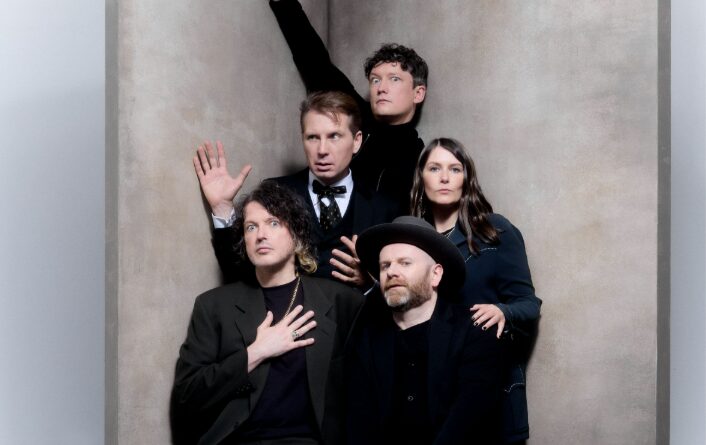
On March 7, 2026, the Israel Defense Forces (IDF) posted a video on their social media channels. The footage showed fighter jets, bomb strikes, and an Israeli soldier celebrating the airstrikes on Iran. Caption: “Operation Roaring Lion – this is how it’s done.” The soundtrack: “Take Me Out” by Franz Ferdinand, the 2004 hit whose chorus takes on a grim double meaning in the context of war propaganda. The video was created without the band’s permission and has since been deleted.

Frontman Alex Kapranos responded on Instagram: “These warmongering murderers are using our music without our consent. This makes us both nauseous and furious. Kind of typical though, isn’t it? To strut up and take what isn’t theirs with a vile arrogance…” A band named after the man whose assassination triggered World War I now finds their biggest hit repurposed as propaganda for what increasingly looks like the beginning of a major regional conflict. The bitter irony writes itself.
The IDF video is not an isolated incident. It is part of a documented pattern that has been systematically intensifying over recent months.
A Chronology of Appropriation
The backstory doesn’t begin with the military but with domestic U.S. politics.
In November 2025, the Department of Homeland Security (DHS) used Olivia Rodrigo’s “All-American Bitch” for a video showing ICE officers chasing and detaining migrants, aimed at encouraging self-deportation. Rodrigo commented directly under the post: “Don’t ever use my songs to promote your racist, hateful propaganda.” Her comment was deleted.
Shortly after, ICE used Sabrina Carpenter’s “Juno” as the soundtrack for footage of migrants being tackled and arrested. Carpenter’s response: “This video is evil and disgusting. Do not ever involve me or my music to benefit your inhumane agenda.” Instead of backing down, the administration doubled down: ICE subsequently used a manipulated Saturday Night Live clip in which Carpenter was made to appear, through altered voiceover, as if she were arresting a Latino cast member for being “too illegal.”
In December 2025, it was SZA’s turn: the White House used her Saturday Night Live cuffing season song in a pro-ICE post. SZA’s response was one of the most precise analyses of the phenomenon: “White House rage baiting artists for free promo is PEAK DARK… inhumanity + shock and awe tactics… Evil n Boring.”
On February 18, 2026, ICE published a video on X featuring a choral version of Radiohead’s “Let Down” over a montage of violence victims that the agency attributes to migrants. Caption: “Thousands of American families have been torn apart because of criminal illegal alien violence.” The band’s response was unambiguous: “We demand that the amateurs in control of the ICE social media account take it down. It ain’t funny, this song means a lot to us and other people, and you don’t get to appropriate it without a fight. Also, go fuck yourselves.”
On February 10, 2026, the White House posted a TikTok: a fighter jet fires a missile at a ship, set to Kesha’s “Blow,” precisely timed to the lyric “This place about to blow.” Caption: “Lethality.” The video amassed over 14.5 million views and 1.8 million likes. When Kesha publicly protested weeks later, White House Communications Director Steven Cheung responded mockingly: “All these ‘singers’ keep falling for this. This just gives us more attention and more view counts.” His deputy Kaelan Dorr added: “Kesha quotes are like Popeye’s Spinach to this team. Memes? They’ll continue.”
Then, on February 28, 2026, war with Iran began. And the propaganda machine shifted into higher gear.
From Deportation Content to War Fancams
What started as domestic political provocation became a military propaganda tool with the outbreak of the Iran war. On February 28, the U.S. and Israel launched a joint military operation against Iran, dubbed “Operation Epic Fury” by Trump and “Operation Roaring Lion” by Netanyahu. Since then, the region has been engulfed in an escalating conflict: Iran’s Supreme Leader Ali Khamenei was killed in the initial strikes, Iran fired hundreds of missiles and drones at Israel and U.S. bases across the region, the Strait of Hormuz has been largely blocked, oil prices have surged by 40 percent, six U.S. service members died in a plane crash over Iraq. On March 3, Israel also authorized a ground offensive in Lebanon.
In this context, the IDF produced the Franz Ferdinand video. But it wasn’t the only one: on March 8, the IDF used “Macarena” by Los del Rio for another propaganda video about the Iran strikes, prompting songwriter Antonio Romero Monge to express “profound discomfort.” Another video from March 6 used Coi Leray’s “Players” to promote Israeli bombing sorties, combined with a reference to the fitness app Strava. Warfare as lifestyle content.
The Calculus Behind the Provocation
What at first glance appears to be ignorance is a deliberate strategy. Rolling Stone summarized the pattern: the White House specifically selects songs by artists who are likely to publicly object. The outrage generates attention, the attention generates clicks, the clicks legitimize the next round. Steven Cheung didn’t even bother to hide the calculus.
The artists’ resistance is therefore not an unwanted side effect. It is the actual function. The outrage is planned, priced in, instrumentalized. When Sabrina Carpenter protests, the White House responds with a pun on her album title (“Here’s a Short n’ Sweet message for Sabrina Carpenter…”). When Kesha tweets “Perverts,” Cheung’s reply earns 26,000 views while Kesha’s post reaches 547,000, pushing the original clip to over 17 million views. The math checks out.
Why Artists Are Powerless
The real problem lies in the licensing structure. On platforms like TikTok, Instagram, and X, music catalogs are available through blanket licenses. When the White House or the IDF uses a song in a video, they are technically operating within the platform’s licensing framework. This leaves artists without the legal leverage to force the removal of such content. The few who have pursued legal action needed years. The estate of Isaac Hayes only recently settled a copyright dispute with the Trump campaign over the song “Hold On, I’m Comin’.”
The list of affected artists continues to grow. Beyond those already mentioned, the Rolling Stones, Neil Young, ABBA, Celine Dion, the Foo Fighters, the White Stripes, Kenny Loggins, and Linda Ronstadt have all objected to the unauthorized use of their music by the Trump administration. Most without measurable success.
The Paradigm Shift: From Political Expression to State Appropriation
We’ve already written on stagedive.net about why metal must be political. The commentary on Randy Blythe’s stance posed the question of whether artists are allowed to make political statements. That question has been answered. What we’re witnessing now is the next level: it’s no longer about whether musicians are allowed to be political. It’s about governments taking other people’s art to aestheticize war.
When a state soundtracks a propaganda video with “Take Me Out” while showing bomb strikes, that’s not a copyright infringement in the traditional sense. It’s the repurposing of art into a weapon. The song is transformed from cultural commons into an instrument of dehumanization. The familiar melody is meant to smooth over the horrors being shown. And the artists’ outrage becomes the catalyst of an attention spiral that further amplifies the propaganda’s purpose.
Franz Ferdinand, named after the trigger of World War I, whose hit ends up in the propaganda of a potential major regional conflict. Radiohead, whose “Let Down” from the OK Computer masterpiece becomes the soundtrack to deportation propaganda. Kesha, whose “Blow” turns the military-industrial complex into a TikTok trend. This is not coincidence. This is calculus.
The German Context: Better Protection, But for How Long?
Anyone thinking this is a purely American phenomenon would be wrong. In Germany, too, artists have repeatedly had to defend themselves against the political appropriation of their music. Helene Fischer obtained an injunction against the far-right NPD in 2015 after they played “Atemlos durch die Nacht” at campaign rallies in Thuringia. The Cologne band Höhner won before both the Jena Court of Appeals and the Federal Court of Justice against the NPD’s use of their songs “Wenn nicht jetzt, wann dann” and “Jetzt geht’s los” at rallies. Wir sind Helden stopped the NPD from using “Gekommen, um zu bleiben” through a court order. Die Toten Hosen protested when the CDU celebrated their 2013 election victory to “Tage wie diese,” with Angela Merkel personally apologizing to frontman Campino afterward. AfD politician Björn Höcke used “Wir sind wir” by Paul van Dyk and Peter Heppner as entrance music until the artists took legal action. Max Giesinger condemned the AfD for using “80 Millionen” at a rally in Pforzheim. Herbert Grönemeyer intervened twice in 2024 when first the CDU used “Zeit, dass sich was dreht” at a Friedrich Merz appearance, and then Green Party candidate Robert Habeck hummed the song in a campaign video.
The crucial difference: in Germany, legal protection actually works. The moral rights provision under Section 14 of the German Copyright Act gives artists the ability to obtain injunctions within weeks against the political appropriation of their work. The Federal Court of Justice confirmed in 2017 that a GEMA license alone is insufficient to use music at political events. The court established that the use of a song at a political rally can endanger an artist’s reputation if an average observer might get the impression that the musician sympathizes with the party.
This represents significantly stronger protection than in the United States, where blanket platform licenses on TikTok and other social media effectively strip artists of any recourse. However, Section 14 was designed for campaign events, not for social media propaganda. The question that Germany must also confront: what happens when the Bundeswehr further escalates its TikTok recruitment strategy? The taz documented in 2025 how unofficial Bundeswehr influencers like the “Cinematic Sergeant,” with hundreds of thousands of followers, paint a romanticized picture of military service through tank stunts and slow-motion footage of masked soldiers in the snow. So far, these accounts use royalty-free music. But the step from recruitment aesthetics to a propaganda video with a pop soundtrack is shorter than one might think. And whether German copyright law is equipped for that scenario is something no court has yet decided.
What Remains
The question that artists and audiences must ask is no longer “Is art allowed to be political?” The new question is: how do you protect art from being co-opted by governments as a weapon of propaganda?
As long as platform licenses make it possible and as long as outrage functions as an engagement booster, the practice will not change. The only language platforms understand is that of users. And the only language governments understand is that of the public.
SZA put it most aptly: “White House rage baiting artists for free promo is PEAK DARK… Evil n Boring.” There’s nothing to add to that. Except perhaps: we should get used to the fact that “Take Me Out” is now also the soundtrack to bomb strikes in Iran. Or we refuse to accept it.