Scene Pick
Not Authentic, but Fantastic: The MPS Tours Germany Again in 2026
The Mittelalterlich Phantasie Spectaculum (Medieval Fantasy Spectacle) is heading into its 30th-plus season this year. What began in 1994 at a marksmen’s festival in the small Westphalian town of Drensteinfurt has long since grown into the world’s largest travelling medieval festival. Nine dates, over a thousand participants, a brand-new retro format, and for us in the Lueneburg Heath a must-attend date in September: the “Fette Heide” (Fat Heath) in Luhmühlen. Fair warning, though: if you only think of bands when you hear MPS, you’re only seeing half the picture. Between encampments, jousting tournaments, 140 market stalls, and a mead in hand, an entire world takes shape here. We explain why it’s worth a visit even for fans of heavier fare.
Over 30 Years of “The Dragon Himself”
The history of the MPS is inseparable from one name: Gisbert Hiller, known to everyone simply as “Gisi.” The native of Drensteinfurt visited a medieval market at the local marksmen’s association’s anniversary celebration in 1993 and was instantly hooked. Together with Johannes Faget of Fogelvrei Produktionen and Frank Breburda of Schwartenhals Produktionen, the concept for the first Mittelalterlich Spectaculum took shape, premiering in 1994 under Gisi’s sole responsibility as organiser.
From the very beginning, he embraced a principle that still defines the MPS to this day: it’s not about historical accuracy, but about fantasy, community, and experience. In the early years, Gisi actively invested in building up the encampment scene, even paying the few existing groups to participate. That seed money has since grown into a movement comprising hundreds of reenactment groups, many of which follow the MPS across Germany from stop to stop.
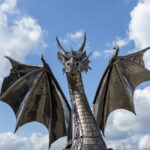
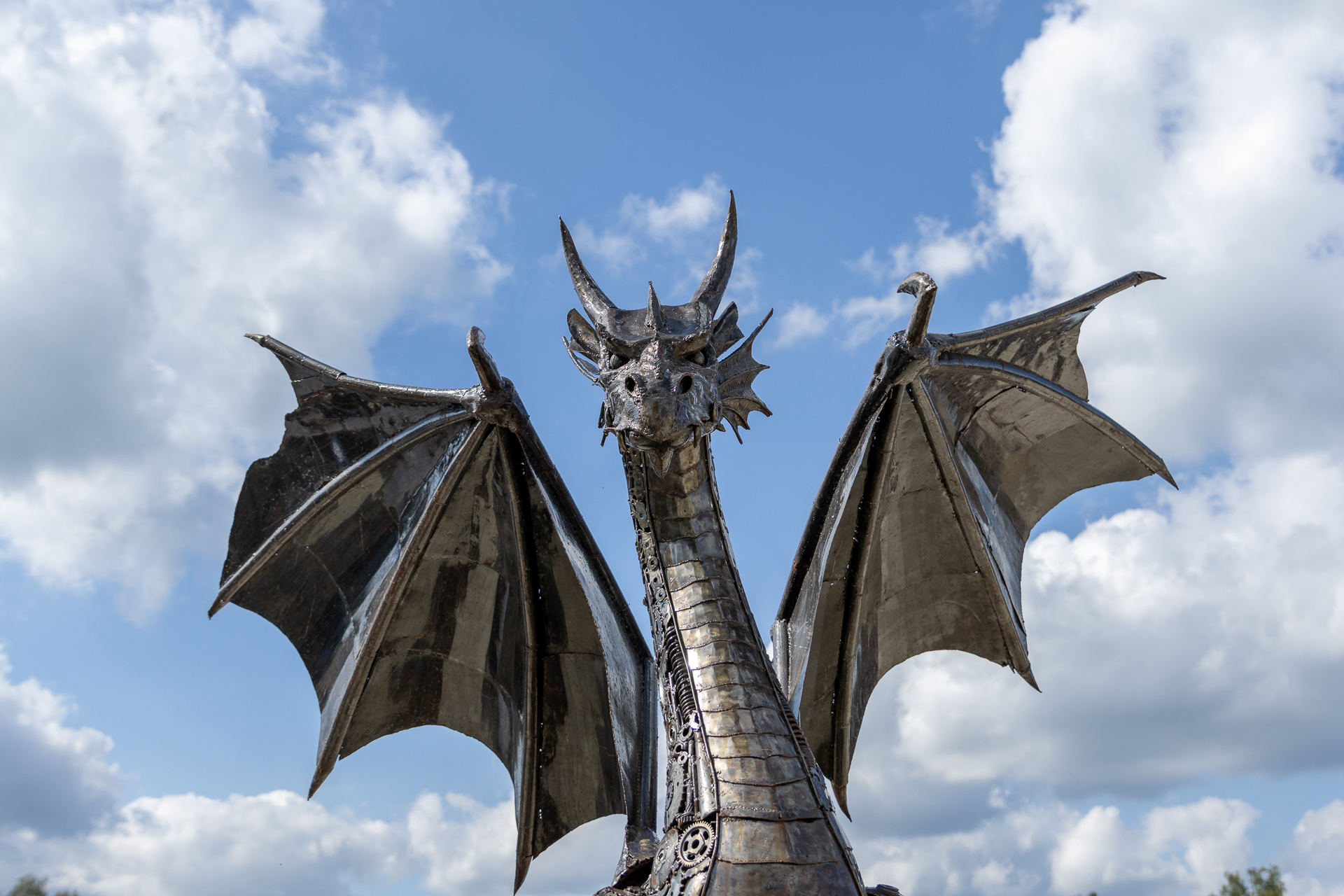
In 2008, the Mittelalterlich Spectaculum became the Mittelalterlich Phantasie Spectaculum, complete with a dragon logo and the motto that has summed it all up ever since: “Since 1994. Not authentic, but fantastic.” This deliberately opens the gates to the fantasy, gothic, and LARP communities, who are just as welcome at the MPS as the historically minded reenactor in chainmail. Orcs alongside crusaders, steampunk next to bagpipes: it’s precisely this openness that makes the MPS what it is.
More Than a Music Festival: What the MPS Actually Is
If you’ve never been to the MPS and only know it from band announcements, you’re getting a skewed picture. The festival consists of two worlds, which at Luhmühlen are even separated physically and by ticket price: the Market MPS and the Music MPS. And for many regulars, the market is the real heart of the event.
The encampments are the living foundation of the MPS. Dozens of groups set up camp on the grounds in medieval fashion, giving visitors a glimpse into 13th-century life. At Luhmühlen, there are around 60 encampments; at Rastede, the same. These groups aren’t paid extras but communities with their own codes of honour, their own histories, and often decades of loyalty to the MPS. They organise processions, take part in the plague march, and compete in the Bruchenball tournament, a medieval ball game that has become a fixture of every MPS event.
The jousting tournaments are among the most spectacular programme highlights: mounted combat with lances and swords, foot combat staged by the Czech fighting troupe Fictum, and tournaments on the arena grounds several times daily. At Luhmühlen, these take place on the equestrian tournament grounds, originally built for competitive horse sport, providing the MPS with an authentic arena.
The market itself is a universe of its own: over 100 stalls featuring craftspeople, blacksmiths, leatherworkers, swordsmiths, costume tailors, and jewellery merchants. If you want, you can outfit yourself from head to toe. Add taverns with mead, berry wine, and hearty food. A distinctive MPS feature is the Goldtaler system: specially minted coins serve as currency at the market, with one Goldtaler equalling one euro. As Gisi puts it on the MPS website: the true nobility pay in gold, the rabble pay with vulgar euros.
The costuming culture has evolved into a phenomenon in its own right over the years. At the MPS in Bueckeburg in 2025, around 400 costumed visitors gathered for a spontaneous group photo on the mausoleum steps, which subsequently went viral on social media. There are costume competitions, and the spectrum ranges from historically accurate portrayals to fantasy cosplay to elaborate orc and elf costumes. The MPS actively encourages this culture rather than steering it in any particular direction: the motto “not authentic, but fantastic” is lived practice here.
The 2026 Season: Nine Dates from April to September
The MPS tours across Germany again in 2026. Here’s the overview:
Bad Saeckingen / 25 + 26 April 2026 / Season opener on the Upper Rhine
Rastede / 14 to 17 May 2026 / Four days in the Schlosspark, for the 28th time at this location, with six stages, 140 market stalls, and 60 encampments
Retro MPS Gut Emkendorf / 23 to 25 May 2026 (Whitsun) / The very first Retro MPS ever (more on that in a moment)
Bueckeburg 1 / 25 + 26 July 2026
Bueckeburg 2 / 01 + 02 August 2026
Weil am Rhein / 14 to 16 August 2026
Speyer / 22 + 23 August 2026
Luhmühlen / 04 to 06 September 2026 / The “Fette Heide” in the Westergellersen Heath
Retro MPS Borken / 26 + 27 September 2026 / Season finale in the new retro format
The Retro MPS: Back to the Roots
Perhaps the most exciting innovation of the 2026 season is the Retro MPS. The format premieres at Whitsun on the historic Gut Emkendorf estate in Schleswig-Holstein, a knight’s manor dating back to 1190. A second retro date follows in late September in Borken. From 2027, the format is set to expand to additional locations across Germany.
The concept is a deliberate counterpoint to the ever-growing main programme, and it reads like a manifesto: no mega-bands, no massive stage rigs, no pyrotechnics, no split venue areas. Instead, small atmospheric bands, jugglers, bards, musical duos, campfires, fire shows, and above all: atmosphere. Instead of steel-pipe stages, two small stages built from wood and cloth. Instead of Heavysaurus, magicians, jesters, and storytellers for the children. The Retro MPS deliberately focuses on what many visitors consider the true spirit of the MPS: the communal experience around the campfire, the closeness to the encampments, the participatory culture.
Ticket prices are set accordingly low: weekend passes cost 28 euros (children 14 euros), day tickets half that. Compare that to the Saturday prices at the major MPS dates, and it’s clear a different model is at work.
For anyone who has been wondering whether the medieval scene is heading towards the same gigantism plaguing the mainstream festival industry, the Retro MPS is a refreshingly honest answer: it can be done smaller, more intimate, more personal. Gisi has listened to the community’s demand and delivers.
Why Luhmühlen Is the Date for Northern Germany
For everyone in Hamburg, Lower Saxony, and Schleswig-Holstein, there has been only one destination since the MPS left Hamburg-Oejendorf in 2018: the “Fette Heide” in Luhmühlen. On the tournament grounds in the Westergellersen Heath near Salzhausen, a parallel universe between heather and encampments emerges every September.
The Music
The 2026 lineup speaks for itself. Friday evening sees Subway to Sally and Feuerschwanz take over the music arena, flanked by Haggefugg and the Warkings. Saturday belongs to Saltatio Mortis, d’Artagnan, Versengold, and Mr. Hurley & Die Pulveraffen. On the market stage, acts like Scotland’s Saor Patrol, the Dutch Rapalje, Ye Banished Privateers, and Duivelspack play in parallel.
That so many of these bands return every year is no coincidence. Acts like Saltatio Mortis literally grew up on the MPS market stages and have maintained close personal ties to Gisbert Hiller and the MPS community for decades. Feuerschwanz, Versengold, and Mr. Hurley & Die Pulveraffen are similarly deep-rooted. For them, the MPS isn’t just another festival stop; it’s a homecoming.
Anyone who thinks medieval rock and the heavier scene have nothing in common clearly hasn’t paid attention to Subway to Sally or Saltatio Mortis. The boundaries between medieval rock, folk metal, and classic heavy metal have long been fluid. Feuerschwanz cover Manowar and Amon Amarth, Saltatio Mortis have collaborated with Blind Guardian, and the Warkings fuse power metal with historical warrior personas. For many metalheads, the MPS has long been a fixture on the festival calendar, even if it’s not officially a metal festival.
Beyond the Stage
Sunday in Luhmühlen belongs entirely to the market. Over 100 stalls, jousting tournaments on the arena grounds, the spectacular fire show by Danse Infernale on Saturday evening, and a broad programme for families. Jesters like Bagatelli and Narrenkai wander between the stalls, the Skyhunters Frechen put on their birds of prey show, and the Pantao Windpferde bring their own unique atmosphere to the grounds with their horse performances. Heavysaurus make sure the next generation of metalheads gets their fix on Sunday, while Orlando von Godenhaven and the Heilige Dreischeusslichkeit (Holy Trinity of Hideousness) entertain the younger crowd with their fairy tale hour.
For the full MPS experience, come in costume. The heath atmosphere in Luhmühlen, which already has something timeless about it, transforms completely when you do. And if you don’t own your own medieval garb, the market has everything your heart desires: from a simple tunic to a full suit of plate armour.
Camping as an Experience
The campsites at Luhmühlen open on the Wednesday before the festival and don’t close until the following Monday. For many regulars, the multi-day camping experience with like-minded people is at least as important as the actual programme. The evenings on the campsites, with mead and berry wine making the rounds and spontaneous musicians playing by the campfire, are often described within the community as the real highlight. The fact that glass bottles are allowed at Luhmühlen, something virtually no other festival in Europe permits, underscores the special culture of trust between organiser and audience.
Prices and Opening Hours Luhmühlen 2026
Opening hours:
Music arena: Friday 3:30 pm to midnight, Saturday 1:00 pm to midnight
Market: Friday closed, Saturday 11:00 am to midnight, Sunday 11:00 am to 7:00 pm
Music arena prices (without market):
Friday: 44 euros (ages 7 to 14: 22 euros, under 7: free)
Saturday: 72 euros (ages 7 to 14: 36 euros)
Combo ticket (market + music):
Saturday: 92 euros (ages 7 to 14: 46 euros)
Market only:
Saturday: 28 euros / Sunday: 24 euros
Camping: From 10 euros for the entire duration (Wednesday to Monday). All campsite revenue goes directly to Hiller’s charitable projects.
More Than a Festival: The Social Commitment
What sets the MPS apart from many commercial large-scale events is its founder’s personal engagement. Gisbert Hiller has been running the “MPS Zimbabwe Aid” project for years, renovating schools and bush clinics in the African country, drilling drinking water wells, and establishing community gardens.
New in Luhmühlen 2026: the previously free campsite is being replaced by a 10-euro campsite. That might sound like a price hike at first, but it’s the opposite of a cash grab: all proceeds go to German animal shelters and the Zimbabwe aid project. In a festival landscape where camping fees easily reach triple digits and go straight to the promoter’s bottom line, that’s a remarkable gesture.
Also worth noting: wheelchair users and their companions (with a “B” designation on their disability ID) have free entry to all MPS events. Guests with a disability ID of 50 percent or higher receive a 50 percent discount. No special applications, no bureaucracy. Quite a few arena shows in Hamburg could learn from this.
MPS vs. Other Medieval Events: What’s Different?
A look around the German medieval scene reveals plenty of providers. The Fogelvreien run their own series of markets and tournaments, the Wave-Gotik-Treffen in Leipzig features a significant medieval market, and smaller regional events like Anno 1280 in Guetersloh focus on historical authenticity.
The MPS sets itself apart through its consistently fantastical approach. It’s not about recreating the 13th century as accurately as possible, but about creating an experiential world where vastly different subcultures meet. Over 30-plus years, this has earned the MPS a community that’s far broader than the traditional reenactment scene: medieval enthusiasts stand alongside LARP players, metalheads alongside families with children, cosplayers alongside hobby historians.
With the new retro format, Gisbert Hiller simultaneously shows that he knows his audience: not everyone wants the full programme with mega-stages and five-figure attendance numbers. Some just want a weekend by the campfire, with good music, good people, and a mead in hand.
If you want to secure a ticket: advance sales are already running via spectaculum.de. Based on previous years’ experience, it’s worth not waiting too long. Campsite spots close to the grounds are particularly sought after.
All information: spectaculum.de
MPS on Instagram: @mps_offiziell