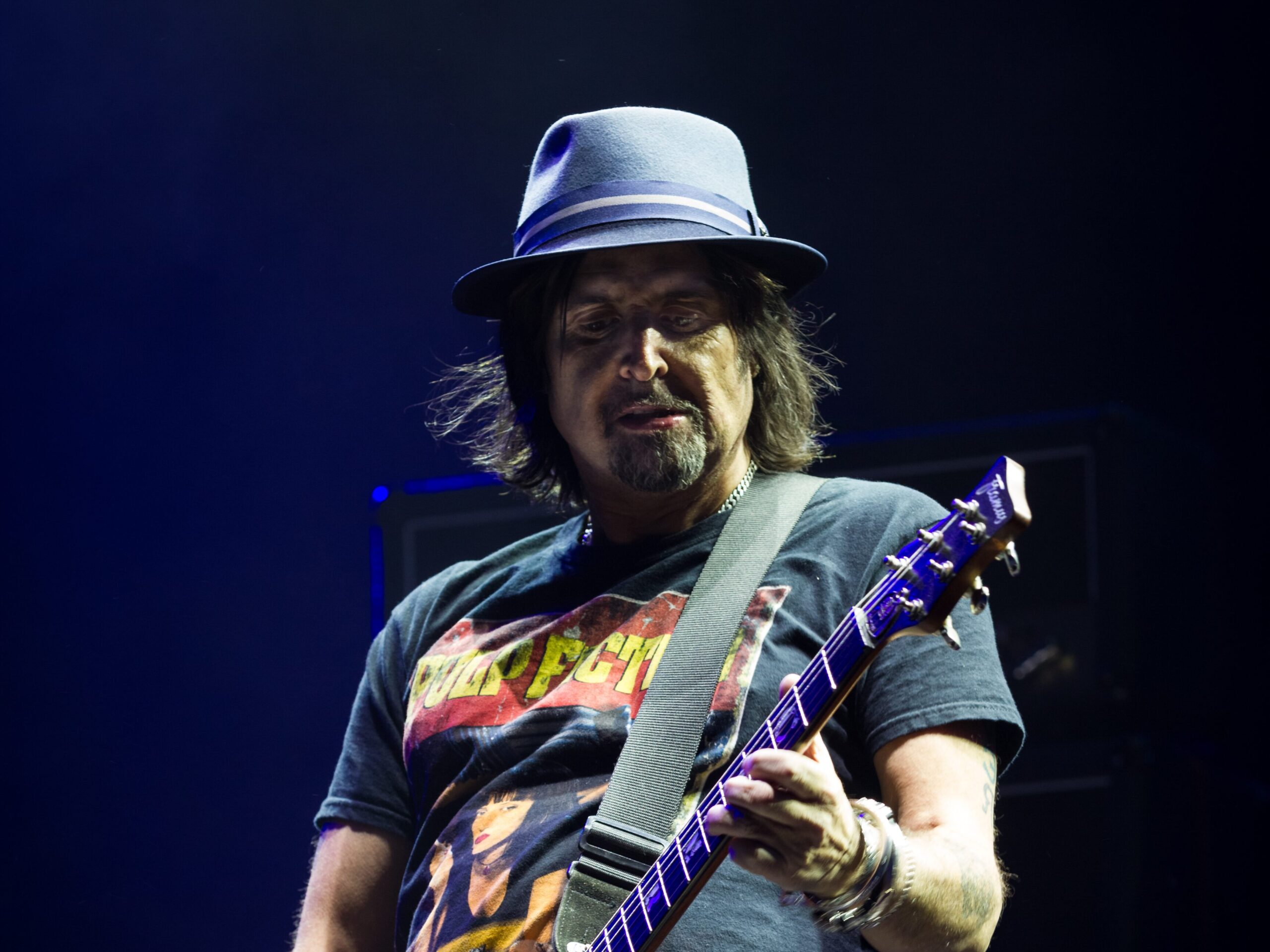
31 Years in the Shadow of a Legend
Phil Campbell: The Man Who Held Motorhead Together
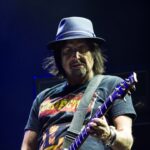
Philip Anthony Campbell is dead. The Motorhead guitarist died on March 13, 2026 at the age of 64, peacefully, after a long battle in intensive care following a complex operation. His sons Todd, Dane and Tyla confirmed the news on Saturday via the social media channels of Phil Campbell and the Bastard Sons.
It is a death that has sent shockwaves of grief through the metal world. And one that simultaneously exposes a bitter irony: Phil Campbell was Motorhead’s guitarist for 31 years, longer than any other member besides Lemmy Kilmister. And yet, for many, he remained the guitarist whose name you had to look up.
The Forgotten Architect
When the world thinks of Motorhead, it thinks of Lemmy. The bass, the whiskey, the hat, the warts. “Ace of Spades.” The idea that a single person can be a band. That is understandable. Lemmy was one of the greatest personalities rock has ever produced.

But Motorhead after 1984 was no longer Lemmy’s solo project with a rotating cast of backing musicians. It was a unit. And the glue holding that unit together was Phil Campbell.
Born on May 7, 1961 in Pontypridd, Wales, Campbell first picked up a guitar at the age of ten. Influenced by Tony Iommi, Jimmy Page and Jimi Hendrix. At twelve, he saw Hawkwind in Cardiff, Lemmy on bass. He got an autograph. That he would be standing on stage next to that very same man just over ten years later was beyond anything he could have imagined.
Campbell’s path led through the cabaret band Contrast (at 13 years old, mind you), the pub-rock outfit Roktopus and the NWOBHM band Persian Risk, with whom he recorded two singles: “Calling for You” (1981) and “Ridin’ High” (1983). When Brian Robertson left Motorhead in 1984, the band held auditions. Lemmy originally intended to hire just one new guitarist. But when he heard Campbell and Michael “Wurzel” Burston play together, he took them both. It was the beginning of an era that would last longer than anything Motorhead had been before.
16 Albums, a Grammy, Zero Ego
Campbell’s first recording with the band was “Orgasmatron” (1986), an album that redefined Motorhead’s sound. Heavier, more complex, more dangerous. Over the following three decades, he delivered the riffs for tracks like “Deaf Forever,” “Eat the Rich” and “Born to Raise Hell.” 16 studio albums. A Grammy in 2005 for their version of Metallica’s “Whiplash,” of all things, in the Best Metal Performance category. The irony that Metallica themselves cited Motorhead as one of their most important influences practically wrote itself.
And always in service of the song. Campbell was no shredder, no ego-driven soloist. He was a guitarist who understood that Motorhead was bigger than any single member. His playing was raw, drenched in blues, full of energy, yet never self-indulgent. When Wurzel left the band in 1995, Campbell took over as sole guitarist and carried the sound on his shoulders from that point on.
The Rock Hall Humiliation
When Motorhead were finally nominated for the Rock and Roll Hall of Fame in 2020, two names were missing from the ballot: Phil Campbell and Mikkey Dee. Only the original lineup of Lemmy, “Fast” Eddie Clarke and Phil “Philthy Animal” Taylor had been included. Three men who, at the time of the nomination, were all already dead.
The absurdity was plain to see. Campbell and Dee had recorded 12 studio albums with Motorhead together. They had carried the band for over 25 years, through the world’s biggest festivals, through the Grammy, through the era in which Motorhead became legend. Mikkey Dee was blunt in his response to Billboard, calling the exclusion simply wrong. Campbell held back. Typical.
Only after massive fan protest did the Rock Hall correct its mistake and add both to the nomination. It was a victory that should never have needed fighting for.
Bastard Sons: The Most Honest Band in the World
After Lemmy’s death in December 2015, Motorhead was over. In a 2023 interview with Classic Rock, Campbell said he spent four months not knowing what to do. Completely exhausted, he had considered retiring.
Then came his eldest son Todd’s 30th birthday in Cardiff. A live band was playing, they jumped in, jammed Rolling Stones covers. It felt right. The fact that this jam session took place roughly two years before Lemmy’s death only makes the story better: the Bastard Sons were not an emergency solution. They were already taking shape before everything fell apart.
From this grew Phil Campbell and the Bastard Sons, initially under the name “Phil Campbell’s All Starr Band,” a play on singer Neil Starr’s surname that many promoters failed to understand. After Lemmy’s death, the fun project turned serious. The band released a self-titled EP in late 2016, followed by three studio albums: “The Age of Absurdity” (2018), “We’re the Bastards” (2020) and “Kings of the Asylum” (2023), plus the live album “Live in the North” (2023). They toured across Europe and opened for Guns N’ Roses. In 2019, Campbell released his only solo album, “Old Lions Still Roar,” featuring guest appearances from Alice Cooper, Rob Halford, Dee Snider and Benji Webbe.
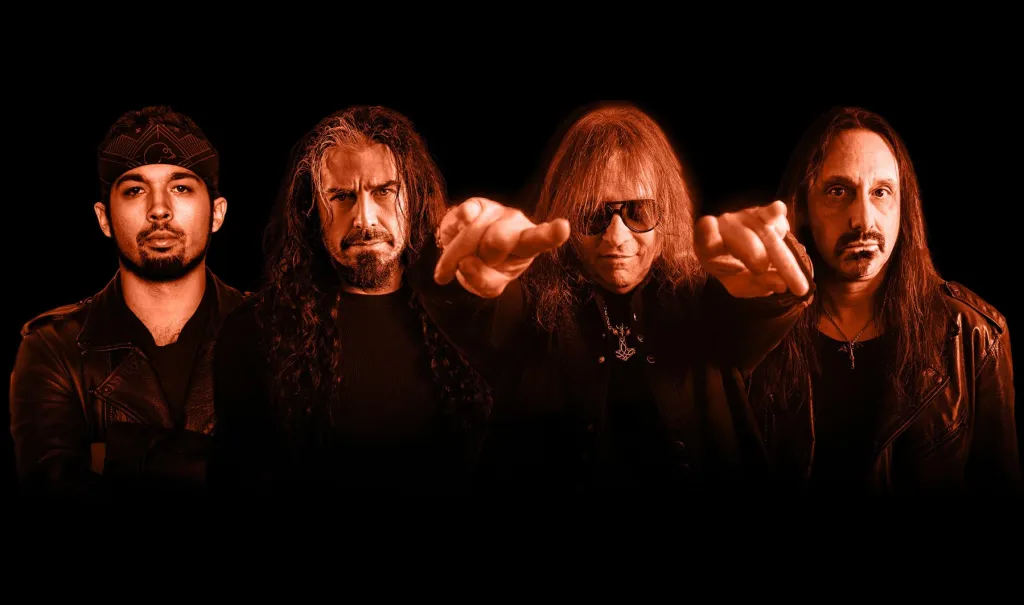
In February 2026, the band cancelled all scheduled shows in Australia and Europe. The reason: medical advice. The public was told nothing more. Campbell was already working on new music with Julian Jenkins, the singer of hard rock band Fury, at the time. A few weeks later, Phil Campbell was dead.
What Remains
The news of Campbell’s death triggered a wave of reactions that reveals how deep his influence ran. Mikkey Dee called him the funniest person he had ever known and the best rock guitarist he had ever played with. Geezer Butler recalled shared tours and the night Campbell showed up to a gig in full make-up, a skirt and a blouse. Dez Fafara of DevilDriver described him as the sweetest guy. Doro Pesch wrote that she was at a loss for words. Triple H thanked him for the music, a reference to the Motorhead songs that carried Campbell’s riffs into the arenas of professional wrestling. Even wrestlers like William Regal and Shawn Michaels weighed in.
His son Tyla wrote on Saturday that he was overwhelmed by the thousands of messages. From old school friends who remembered how his father would simply stroll into the school hall and play a few tunes on the piano before picking him up. From rock icons who wrote to say his father was one of the best human beings they had ever met. The final sentence: they had no idea that this would be their last Christmas together.
Phil Campbell leaves behind his wife Gaynor and his three sons. He leaves behind 16 studio albums with Motorhead and a solo body of work that proves he was never just a sideman. He leaves behind the Bastard Sons, the most honest family band in rock.
And he leaves behind a question that the music industry should ask itself more often: Why do we find it so hard to honour the person who stands in the background and makes sure everything works?
Mikkey Dee closed his tribute with the words: Sleep well, my friend and rock soldier. Say hi to Lemmy, Wurzel, Philthy and Eddie. I’m sure you’ll be one crazy gang hanging out together again.
Phil Campbell has arrived. The crazy gang is complete once more.